
The honest buyer’s guide
How to choose a dash cam without overpaying
Most buying guides are spec sheets in disguise. This one is shorter and more honest: the six things that actually change the footage, the numbers you can safely ignore, and how to match a setup to the way you really drive.
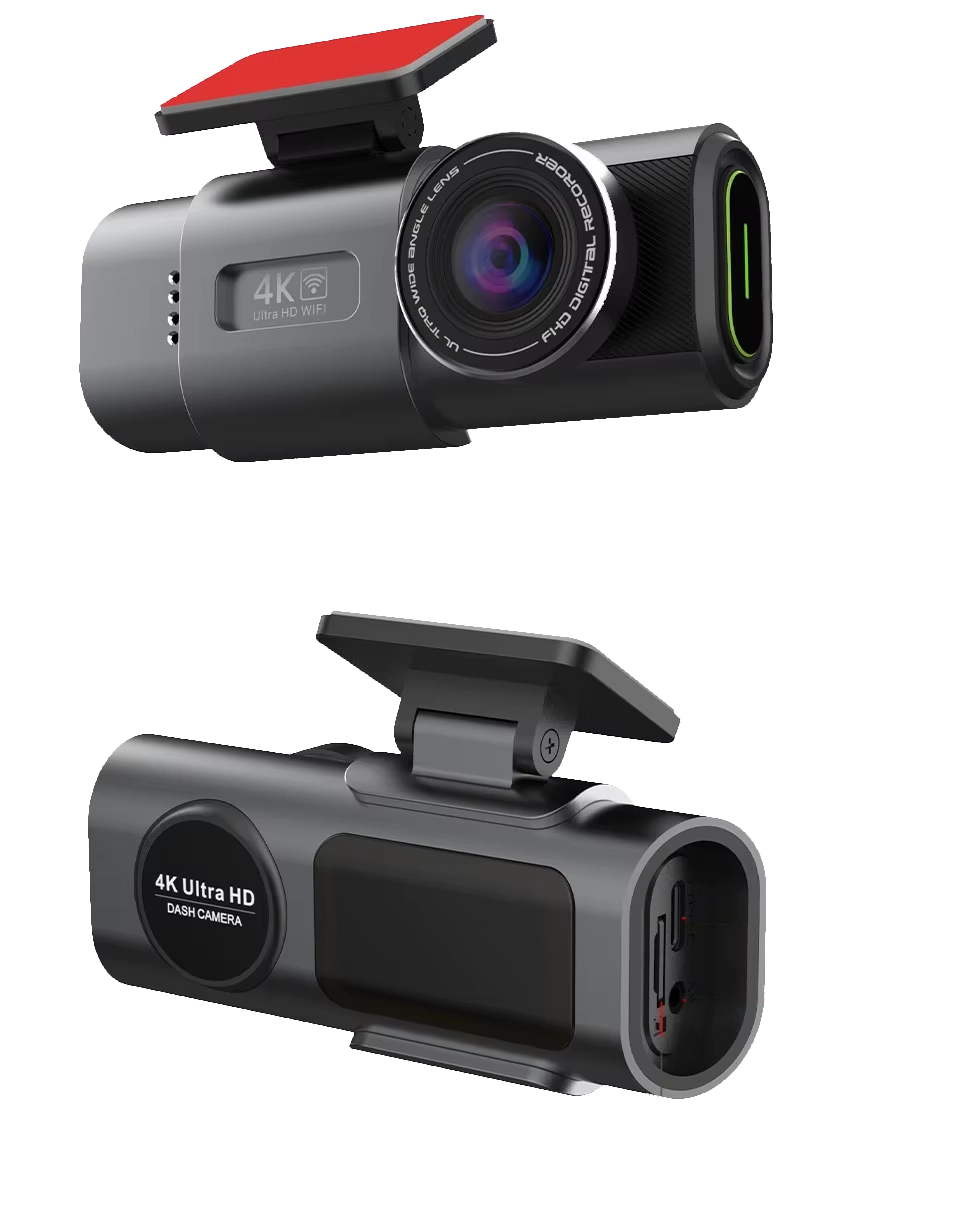
Why this gets confusing
Bigger numbers don’t mean better evidence
Two cameras can both say “4K” and produce very different footage. One reads a plate two lanes over; the other turns it to mush the moment the light drops. The label on the box doesn’t tell you which is which.
So listings pile on megapixels, “super night vision,” and interpolated resolutions you’ll never use — and bury the handful of specs that decide whether your footage holds up when you actually need it. A dash cam only earns its place on the day something goes wrong, so the right question isn’t “which has the biggest numbers?” but “which will be readable in court, at night, at speed?” The fix isn’t a longer checklist. It’s a shorter one that’s honest about what changes the result.
The 30-second answer
Buy for real-world clarity, not the spec sheet. Prioritise a genuine 4K front sensor, a sensible 140–170° lens, strong low-light handling, and an endurance memory card. Add a rear camera if you want to cover what comes from behind, and parking mode only if you can power it properly.
- Most drivers: a single 4K front camera covers the large majority of incidents.
- City & rideshare: add the rear camera — rear-end and door incidents are common.
- Parking worries: plan for a hardwire and a 24h power source before you rely on it.
The shortlist
Six things that actually matter
Swipe across → each card is one decision, in plain terms.
01 / RESOLUTION
Real 4K, not interpolated
1080p shows what happened. 4K shows who did it — plates and faces a lane or two away. But only if the sensor is genuinely 4K, not an upscaled lower one.
Look for: native 4K and a named sensor (e.g. Sony), not just a megapixel count.
02 / FIELD OF VIEW
Wide enough, not fish-eyed
A 140–170° lens covers your lane plus the ones beside it. Go too wide and the edges distort and detail thins out where you need it.
Look for: 150–170° front. Dashline runs a 170° wide angle.
03 / LOW LIGHT
The spec that saves you at night
Most incidents that go to dispute happen in poor light. A bright lens (low f-number) and WDR matter more after dark than another zero on the resolution.
Look for: a wide aperture (F1.6 here) and WDR, not the words “night vision.”
04 / MEMORY CARD
Endurance beats raw size
4K writes constantly. A normal card can fail within months. The card decides whether your footage is actually there when you go looking.
Look for: a U3 / V30 high-endurance microSD, sized to how long you record.
05 / PARKING MODE
Only as good as its power
Recording while parked needs constant power. The cigarette socket dies with the engine, so real parking mode means a hardwire and a dedicated source.
Look for: hardwire support + a 24h battery or cut-off kit. Heat shortens battery life.
06 / APP & GPS
Useful, and subscription-free
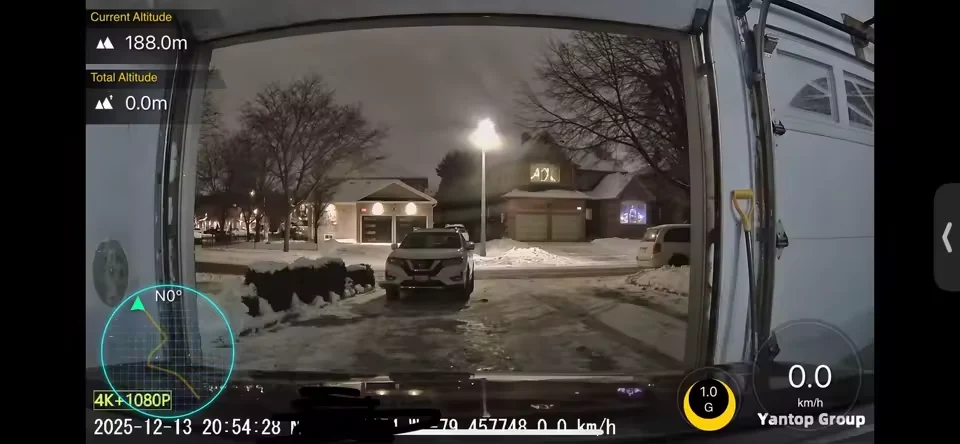
A local WiFi app lets you pull clips to your phone without removing the card. GPS stamps speed and location into the file — handy as context, not live tracking.
Look for: on-device storage and no monthly fee. Dashline stays subscription-free.
Spec decoder
What the listing says vs what to check
A quick translation of the phrases you’ll see on every product page — and the question that actually settles it. Plate clarity, in particular, falls off fast with speed and distance; we cover that honestly in our guide to whether a dash cam can read plates at night.
| On the box | What it really means | What to actually check |
|---|---|---|
| “4K Ultra HD” | Detail potential — if the sensor is truly 4K. | Native resolution and the sensor name, not megapixels. |
| “Super night vision” | Marketing for low-light handling. | Aperture (f-number) and WDR. Ask to see real night footage. |
| “170° wide angle” | How much road is in frame. | 150–170° is the sweet spot; wider distorts the edges. |
| “Supports 256GB” | Maximum card size, not what’s included. | Whether the card is high-endurance (U3/V30). |
| “Parking monitor” | It can record parked. | How it’s powered — hardwire and a 24h source, or nothing. |
| “GPS & WiFi” | Location stamp + phone access. | Local storage, no subscription, no live data plan. |
Notice the pattern: every claim worth anything points back to hardware you can verify — the sensor, the lens, the power, the card. The words are free to print. The components are what you’re paying for, and they’re what hold up when a clip becomes the only neutral account of what happened.
The one that matters most
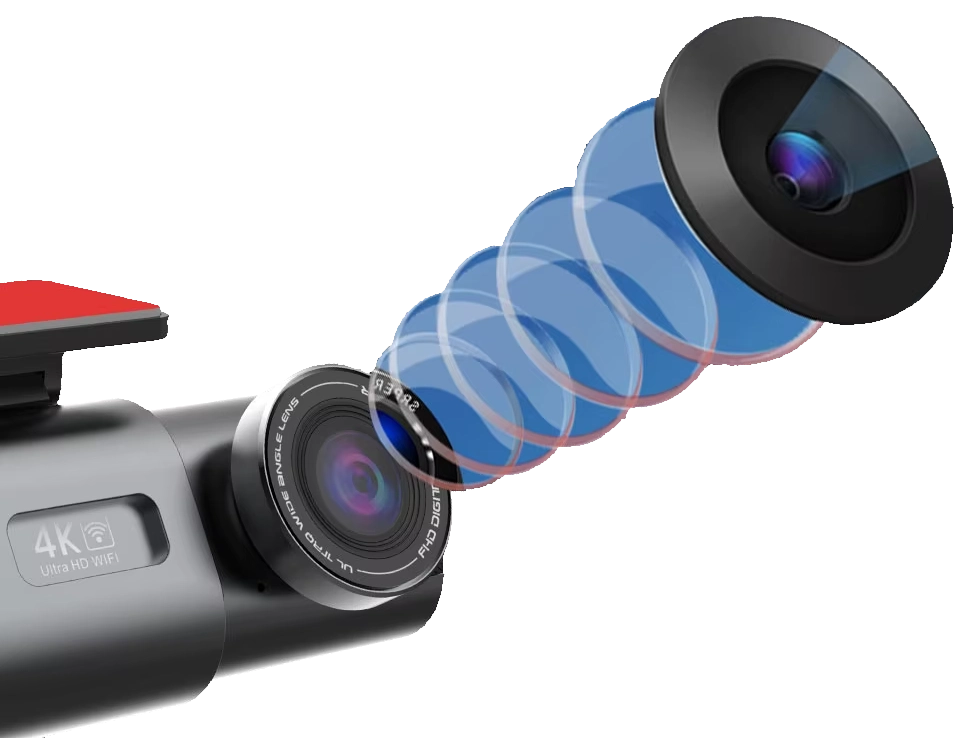
It’s the lens and sensor, not the megapixels
Resolution sets the ceiling. The lens and sensor decide whether you ever reach it. A wide F1.6 aperture pulls in far more light, so detail survives at dusk, under streetlights, and in rain — exactly when a sharp frame matters.
WDR balances bright sky against dark road so headlights and shadows don’t blow out the frame. Frame rate matters less than people think: 30fps is smooth enough for evidence, and chasing 60fps usually costs you light sensitivity or storage you’d rather keep.
So when you compare cameras, look past the headline number and ask one thing: how does the footage actually look when the light is bad?
What to ignore · what no camera can do
The honest part of the decision
Ignore inflated megapixels
Interpolated resolutions and giant MP claims are software stretching a smaller sensor. The native sensor and lens are what you’re really buying.
Plates aren’t guaranteed
No camera reads every plate. Speed, angle, distance, glare and dirt all work against it. 4K improves your odds; it doesn’t promise a result.
Parking mode has trade-offs
It needs a hardwire and constant power, and battery-based packs lose capacity in extreme summer heat. Plan the install; don’t assume it works out of the box.
It’s evidence, not prevention
A dash cam records what happens — it can’t stop it. Its value is a clear, time-stamped account when someone’s version of events doesn’t match yours.
Match it to you
Which setup fits how you drive
The everyday driver
Commuting and errands, mostly daylight. You want a clear record of the road ahead without fuss.
→ Standard: 4K front only
The city & rideshare driver
Heavy traffic, tight parking, passengers. Rear-end taps and door dings come from behind, so cover both directions. See the front and rear setup.
→ Dual Cameras: front + rear
The overnight parker
Street parking or a busy car park. You want the camera watching while you’re away — and you can hardwire for power.
→ Full Protection: + 24h parking
Still unsure? Start with Standard and add the rear camera later — the front sensor is the same in every tier, so you never lose the part that does most of the work.
Pick your tier
One camera. Three levels of protection.
Same 4K camera and app in every tier — the difference is how much of the car you cover and whether it watches while parked.
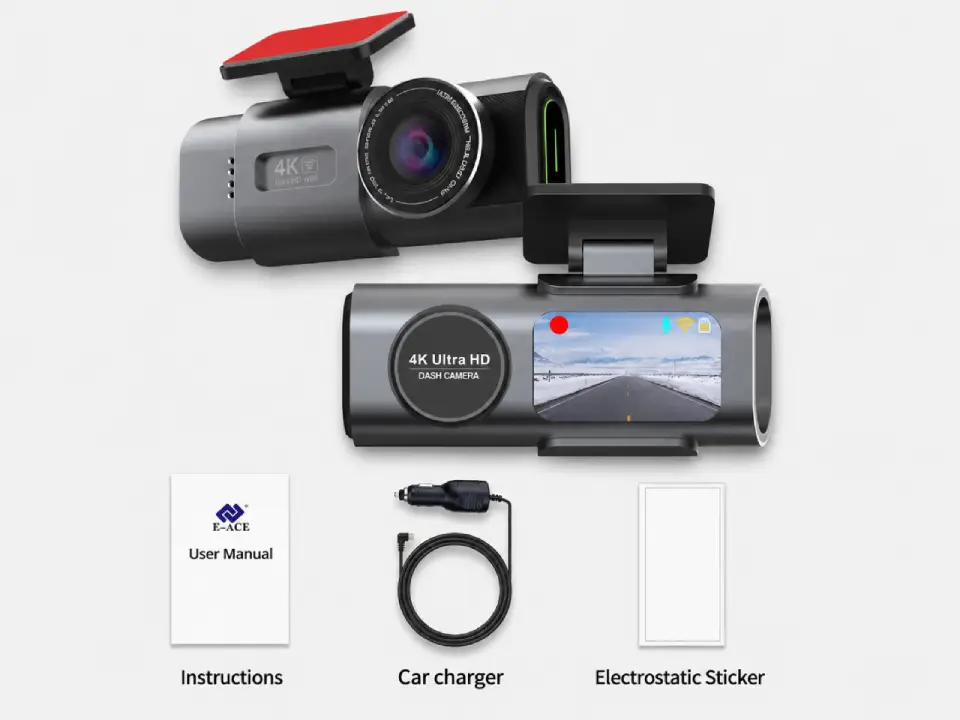
Standard
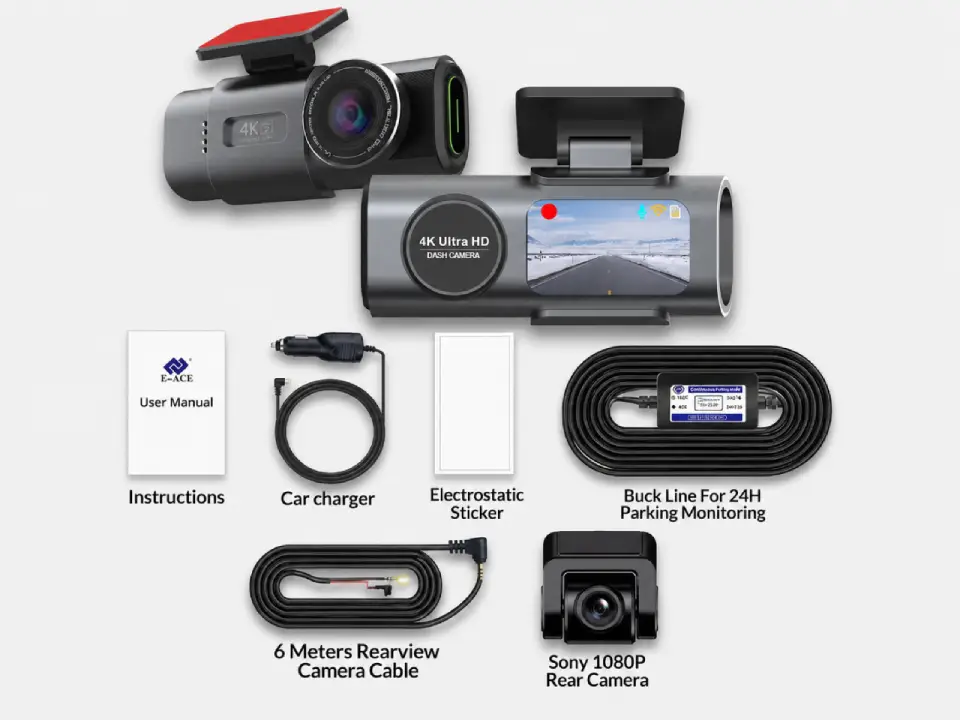
Package contents
- Front camera
- Car connection cable
- Magnetic sticker
Most popular
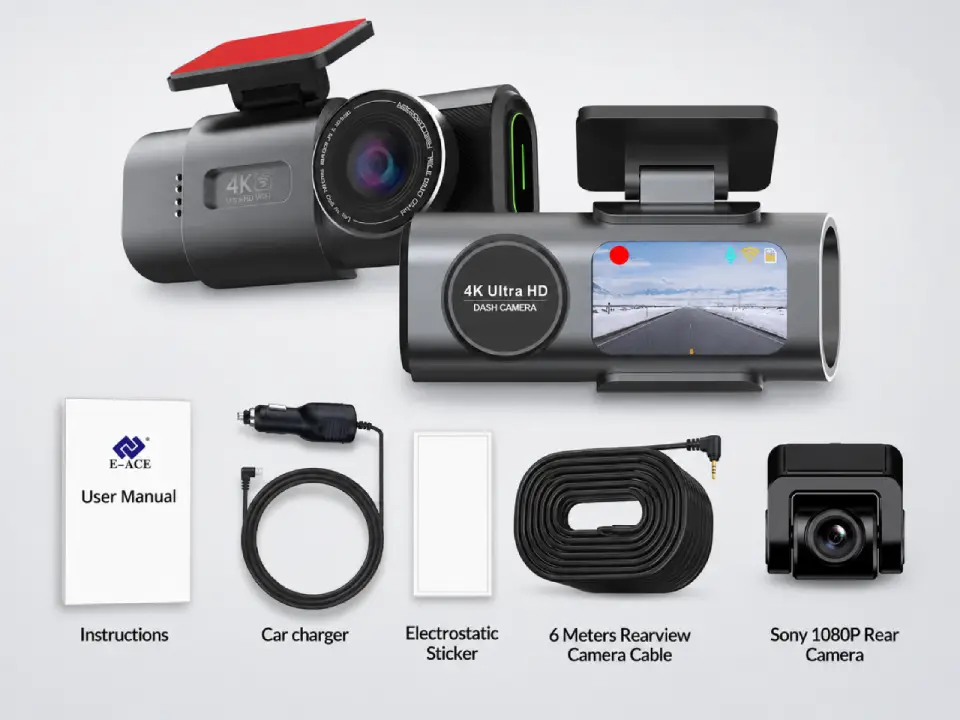
Dual Cameras
Package contents
- Everything in Standard
- Sony rear camera
- 6-meter connection cable
Full Protection
Package contents
- Everything in Dual Cameras
- 24h-compatible battery
- Live view from parked car
Free Shipping
5–10 days across Europe
Secure Payment
Apple Pay · PayPal · Stripe
2-Year Warranty
Full hardware coverage
30-Day Return
No questions asked
Questions buyers actually ask
Is 4K worth it, or is 1080p enough?
1080p captures that an incident happened. 4K captures the detail that identifies who was involved — plates and faces at a useful distance. For the small price difference, 4K is the safer buy, as long as the sensor is genuinely 4K.
Do I really need a rear camera?
If you drive in traffic, park on the street, or carry passengers, yes — a lot of incidents come from behind. If you mostly drive open roads in daylight, a strong front camera covers the majority of situations.
How big a memory card should I get?
Match it to how long you want before footage loops over. A high-endurance 128GB card is a sensible default for 4K; 256GB if you record front and rear or use parking mode. Endurance rating matters more than raw size.
What makes a dash cam good at night?
A bright lens (low f-number, F1.6 here) and WDR, not the phrase “night vision.” Those decide how much usable detail survives under streetlights and headlights. Ask to see real night footage before you trust a claim.
Does parking mode work on any car?
It needs constant power, which means a hardwire to the fuse box plus a 24h-compatible source — not the cigarette socket, which cuts off with the engine. It’s very doable, but plan the install rather than assuming it’s automatic.
Is there a subscription or monthly fee?
No. Dashline records to a microSD card and connects to your phone over local WiFi. GPS and footage live on the device and the card — there’s no data plan and no cloud subscription.
Can it actually read every license plate?
No camera can promise that. Speed, angle, distance, glare and dirt all affect it. 4K and a good lens improve your odds significantly, but treat any “reads every plate” claim with caution.
WHAT ACTUALLY MATTERS
The five specs that decide it — and the ones that don’t
Most dash cam listings lead with the biggest number. When you’re choosing, weigh these five in order instead:
- Sensor + aperture, not just resolution. A good low-light sensor and a wide lens matter more at night than the “4K” label.
- Native vs upscaled 4K. Native 4K captures real sensor pixels; upscaled 4K enlarges a smaller image. Check which you’re buying.
- One camera or two. Front-only is simpler and covers what you cause; a rear channel adds what happens behind you.
- How parking mode is powered. 24-hour cover needs a hardwire kit, not the default car-charger lead.
- Storage and running cost. A card you own beats a monthly cloud fee — check the camera isn’t subscription-locked.
From there it’s about fit: whether 4K is worth it for you, whether you need a rear camera, and which memory card will actually last.
Now you know what to look for
One camera that ticks the real boxes
Native 4K, a 170° F1.6 lens, local app and GPS, no subscription — in three tiers that match how you actually drive.
Leave a Reply