
DASHLINE • FRONT VS FRONT + REAR
Do You Need a Front and Rear Dash Cam?
You watch the road ahead — but a front and rear dash cam also records the car that drives into you, and nearly a third of crashes come from behind. Here is an honest look at when the rear camera earns its place, and when front-only is plenty.
THE HALF YOU CAN’T SEE
Most dash cam owners protect one direction
If you bought a dash cam, you were probably picturing the classic scene: someone pulls out, brakes hard, or runs a light in front of you, and your footage settles it. A front camera does that job well.
But sit at a red light and look in your mirror. The driver rolling up behind you, glued to their phone, is the crash you never see coming — a rear-end hit, a tailgater, a parking knock, a hit-and-run to your bumper. A front-only camera is pointed the wrong way for all of it. The question isn’t “front or rear”. It’s whether the back half of your car is worth recording too.
THE 30-SECOND ANSWER
Front-only covers what you cause. Front + rear covers what happens to you.
For a lot of drivers, a good front camera is genuinely enough. A rear camera earns its price when you sit in heavy traffic, get tailgated, park on the street, or drive for a living — because that’s where rear-end hits, following drivers and parking damage actually happen. It is an upgrade for specific risks, not a must-have for everyone. This guide shows you which group you’re in.
DASHLINE • REAR-END REALITY
The crash type your front camera misses most
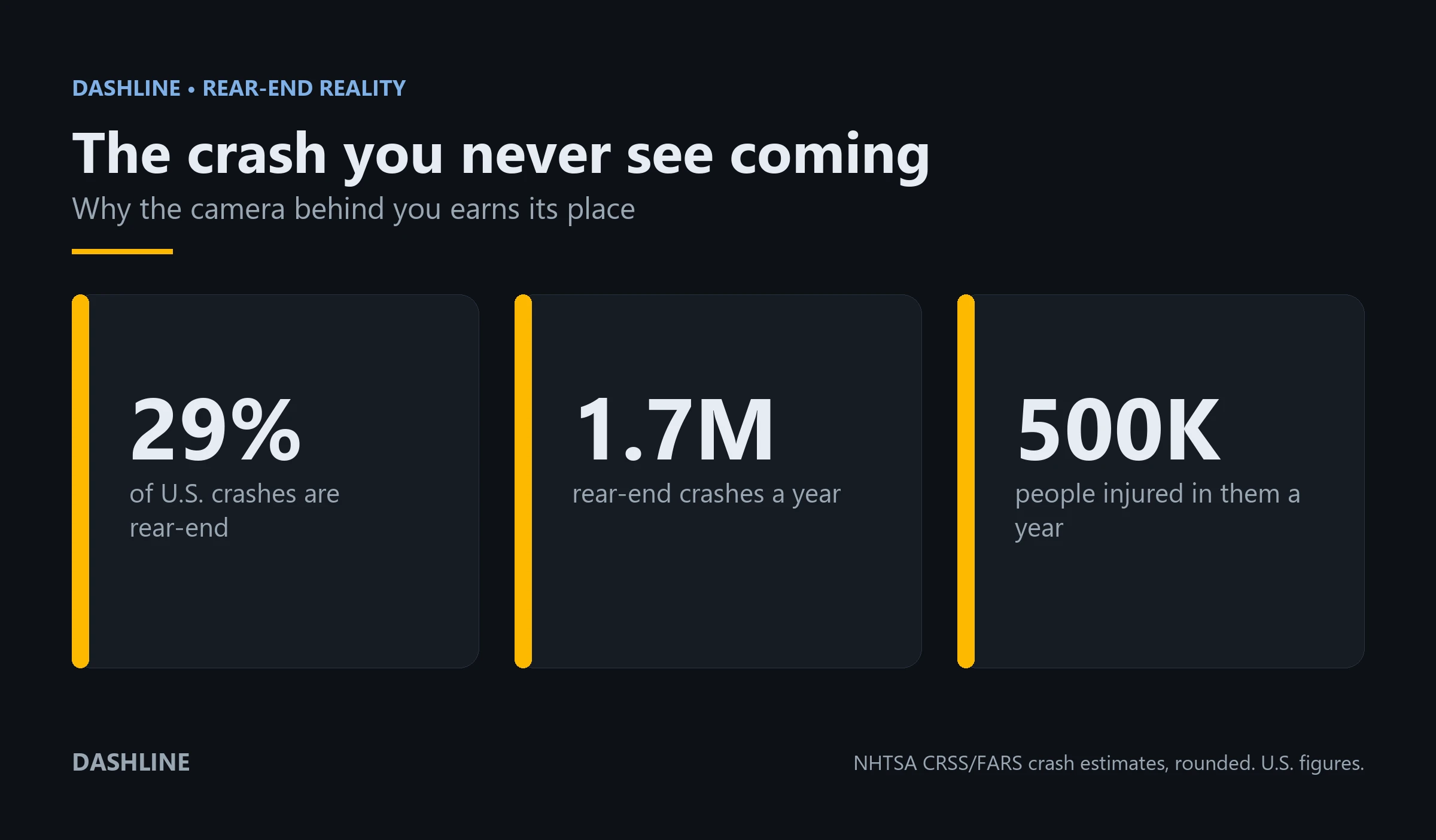
Rear-end collisions are the single most common crash on U.S. roads — and by definition they happen behind you.
THE REAR-VIEW LEDGER
What front-only misses, incident by incident
Five everyday incidents, and what each camera setup actually captures. This is the honest core of the decision.
Someone rear-ends you at a light
FRONT-ONLY
Records the impact and your view forward, but not the car that hit you or its plate.
REAR ADDS
Captures the vehicle behind, the closing speed and the plate, so fault isn’t your word against theirs.
A tailgater rides your bumper
FRONT-ONLY
You feel it, but there’s no footage of how close they were or what they did.
REAR ADDS
Logs the following distance and any brake-check or swerve, useful evidence in a road-rage dispute.
A hit-and-run to your parked bumper
FRONT-ONLY
Front camera may miss it entirely if the hit comes from behind while parked.
REAR ADDS
With parking mode, the rear can catch the bump and the leaving car’s plate.
You get reversed into in a car park
FRONT-ONLY
Depends on angle; a rear knock is often out of a front lens’s view.
REAR ADDS
Points straight at the most common low-speed parking damage.
A driver follows you after an incident
FRONT-ONLY
No record of who or what is behind you.
REAR ADDS
Keeps a timestamped, GPS-tagged record of the vehicle behind.
Front-only isn’t “bad” here, it’s just aimed forward. Every row above is a rear-facing event. If none of them describe your driving, front-only may be all you need. If several do, that’s the rear camera paying for itself.
DASHLINE • COVERAGE
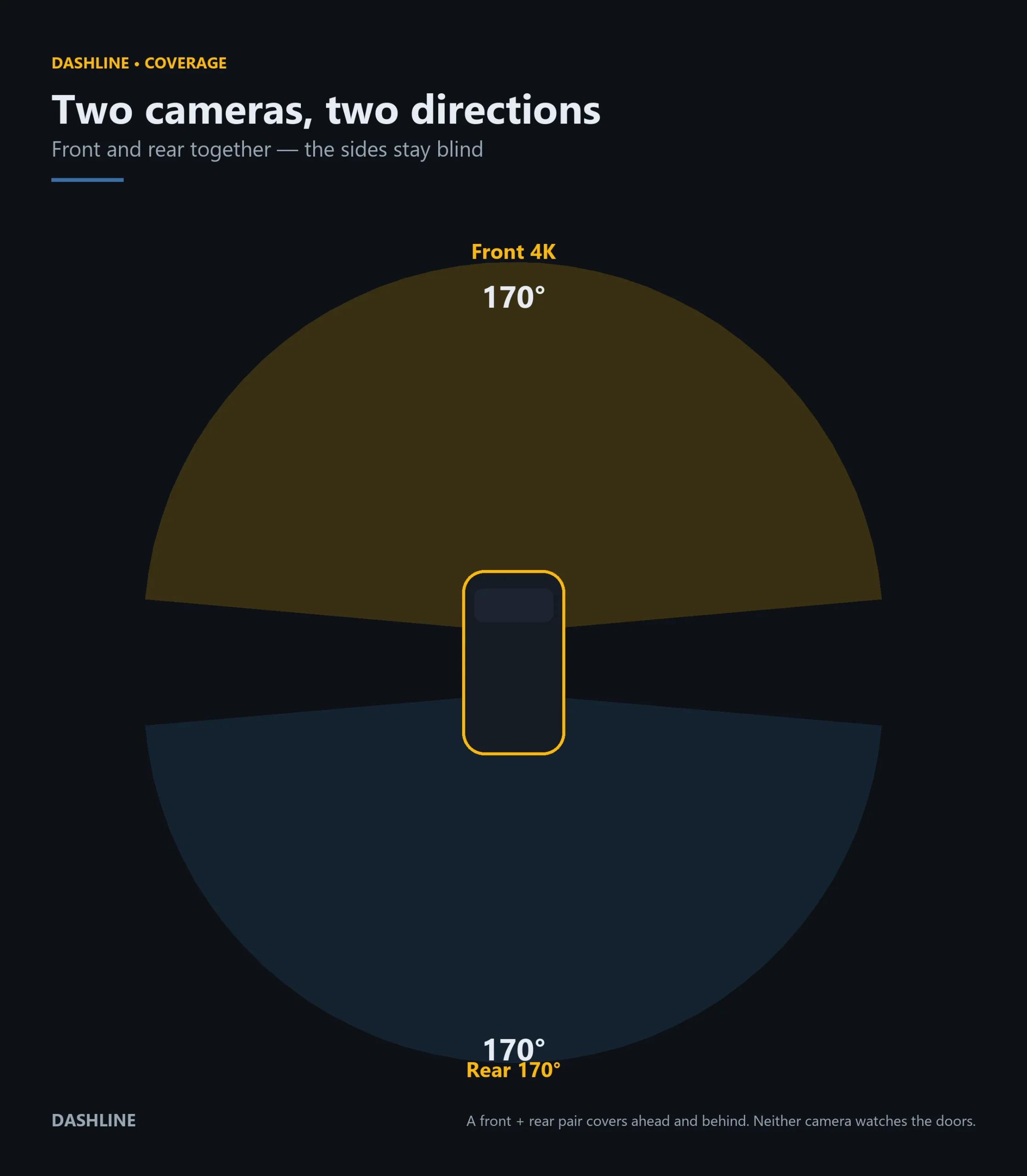
Two cameras cover two directions, not four
A front + rear pair records the road ahead and behind. Be honest about the limit: neither camera watches the sides of your car, so a door ding or a side-swipe in traffic can still fall outside the frame.
FEATURE DEEP-DIVE
The rear camera’s real job: the plate behind you
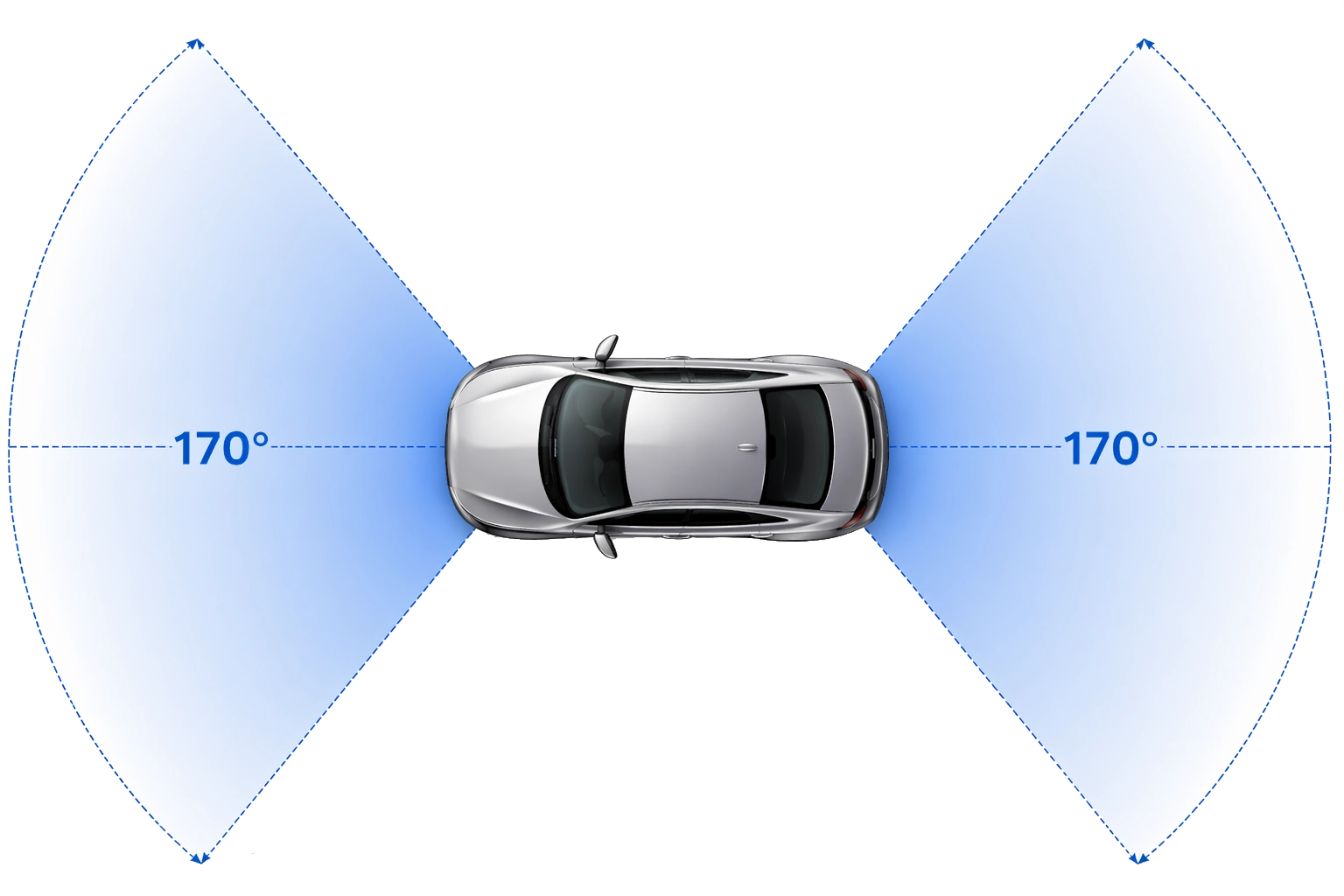
A rear camera isn’t there to look pretty. Its one job is to hold enough detail to read a plate and show what the car behind you did. Dashline’s optional rear is a 170° wide-angle module, so it takes in the whole lane behind you, not a narrow slice.
Be realistic about the honest catch: a rear camera shoots through your rear window. Tint, rain, road grime, glare and a heated-glass grid all soften the image, and rear resolution is usually lower than the 4K front. It’s built to identify a vehicle and its plate at sensible distance, not to read fine print across three lanes at night. Learn more about catching a parked hit-and-run.
60 SECONDS, ONE DISPUTE
How a rear clip settles a “you reversed into me” claim
0:00
Normal flow
You’re stopped in a queue of traffic, foot on the brake, nothing unusual.
0:12
The hit
The car behind rolls forward and taps your bumper. Low speed, real damage.
0:30
The story changes
At the roadside the other driver claims you reversed into them. Now it’s word against word.
0:45
The rear clip
Your rear camera shows you stationary, brake lights on, and their car moving into you, with a timestamp and GPS.
0:60
Resolved
Fault is clear without a dispute. This is the exact gap a front-only camera can’t fill.
HONEST LIMITS
What a rear camera won’t do
Buy it for what it’s good at, not for what a marketing page implies.
It shoots through glass
Tint, glare, rain and a heated-glass grid all soften the rear image. It won’t match the 4K front for clarity.
It doesn’t cover the sides
Two cameras watch ahead and behind. A side-swipe or door ding can still be out of frame.
Plates aren’t guaranteed
Legibility depends on distance, speed and light, day or night, for any dash cam, front or rear.
It needs the dual kit and wiring
The rear runs on the Dual or Full setup and a cable to the back of the car. Front-only can’t add it later without the kit.
WHICH SETUP FITS YOU
Match your driving to a setup
An honest recommendation, including when to save your money and stay front-only.
LOW-TRAFFIC, GARAGE-PARKED
Mostly open roads, a private driveway or garage, little stop-and-go. Rear-facing risk is genuinely low.
Recommended: Standard (front only). Save the difference.
COMMUTER OR STREET-PARKED
Daily traffic queues, tailgaters, or a car left on the street overnight. This is where the rear pays off.
Recommended: Dual Cameras (front + rear).
RIDESHARE, DELIVERY OR HIGH-MILEAGE
You’re in traffic all day and want the car watched while parked, too.
Recommended: Full Protection (front + rear + 24h).
Not sure which channel count you need? Compare the front and rear options in detail, or read our take on handling tailgaters and road rage.
SIDE BY SIDE
Front only vs front + rear, on one screen
| Standard | Dual Cameras | Full Protection | |
|---|---|---|---|
| Cameras | Front only | Front + rear | Front + rear + 24h |
| Covers rear-end hits | No | Yes | Yes |
| Watches while parked | Limited | Limited | Yes, 24h buffered |
| Best for | Open-road, garage-parked | Commuters, street parking | Rideshare, delivery, fleet |
| Price | €85.95 | €112.95 | €121.55 |
PICK YOUR COVERAGE
Three setups, one honest camera
Same 4K front camera and 170° night vision across the board. The only question is how much of the car you want on record.
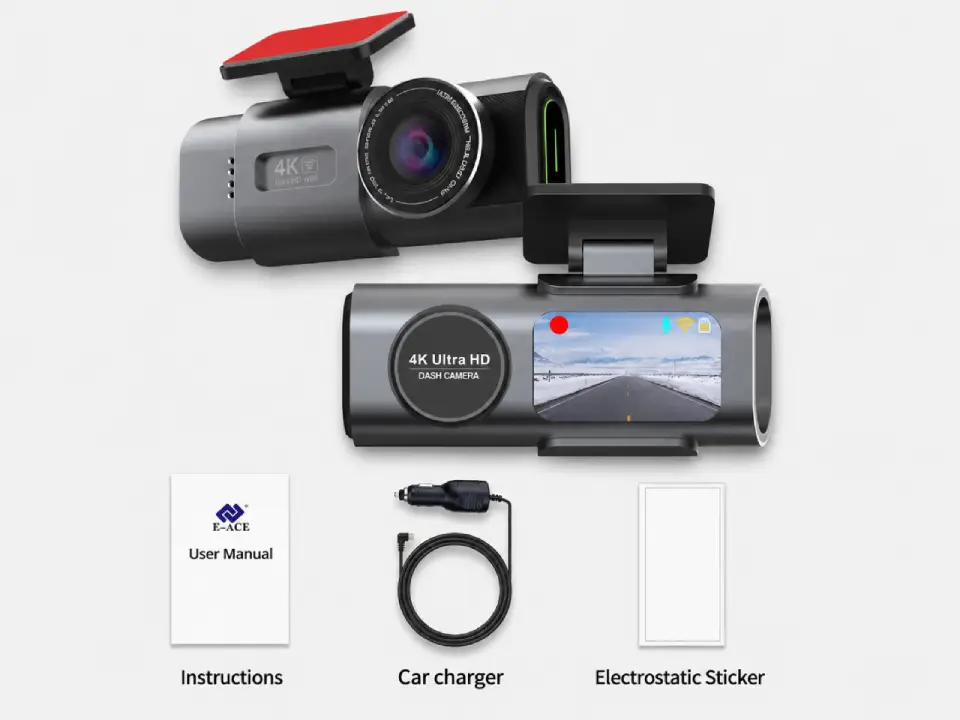
Standard
€85.95
The 4K front camera on its own. Covers everything ahead of you.
Best for open-road, garage-parked drivers.
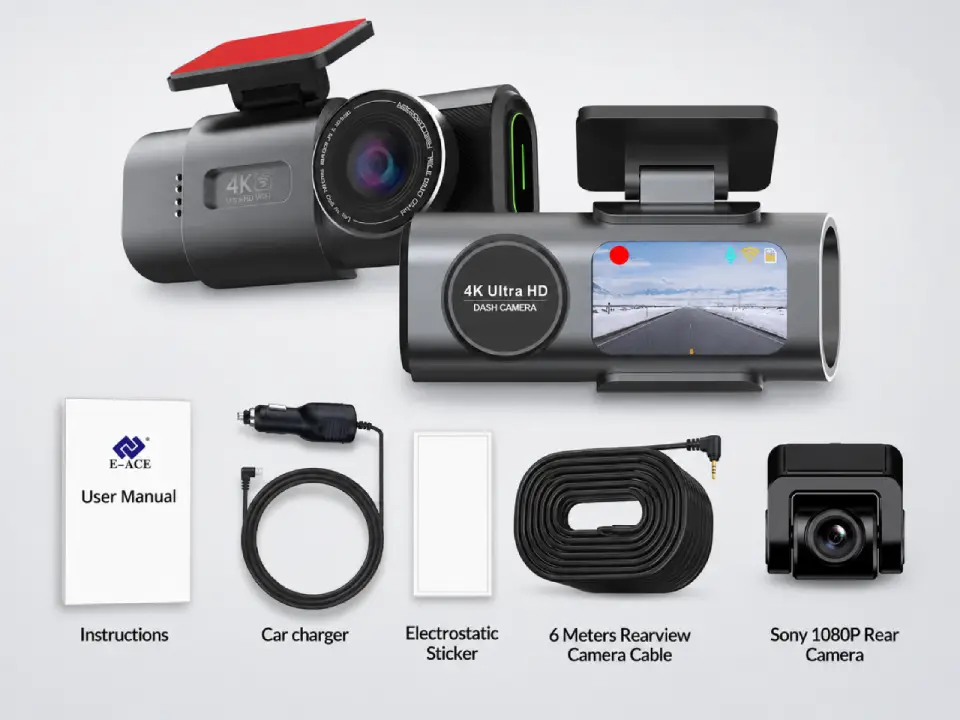
Dual Cameras
€112.95
Adds the 170° rear module. Covers the road behind you too.
Best for commuters and street parking.
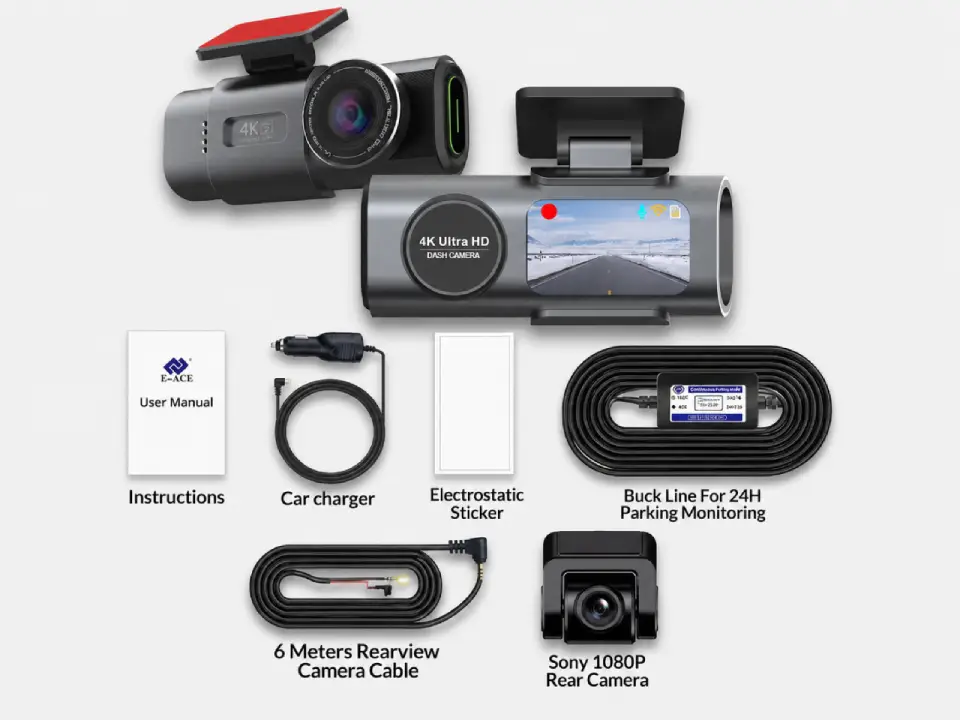
Full Protection
€121.55
Front + rear plus 24h parking protection.
Best for rideshare, delivery and fleet.
Real 4K, honestly stated
No inflated “interpolated” numbers. What you buy is what records.
Local storage
Footage stays on your microSD card, not a subscription cloud.
170° night vision
Wide field of view with genuine low-light performance, front and rear.
Works with your car
Plug-and-play or hardwired; no app subscription to keep it running.
STRAIGHT ANSWERS
Front and rear dash cam FAQ
Do I really need a rear dash cam, or is front enough?
Front-only is genuinely enough for many drivers, especially if you mostly drive open roads and park off-street. A rear camera earns its price if you sit in traffic, get tailgated, park on the street, or drive for work, because that’s where rear-end hits and parking damage happen.
Does a rear camera record the same quality as the front?
Usually not. The front is 4K; the rear is a wide-angle module shooting through your rear window, so tint, glare and glass soften it. It’s built to identify a vehicle and its plate at sensible distance, not to match the front’s clarity.
Will a rear camera read the plate of a car behind me?
Often, at a reasonable distance and speed, in good light. Like any dash cam, legibility drops with distance, speed and darkness, and through tinted rear glass. Treat a readable plate as likely, not guaranteed.
Can I add a rear camera to a front-only setup later?
You need the Dual or Full kit, which includes the rear module and the cable that runs to the back of the car. A Standard front-only unit can’t simply gain a rear camera without that kit.
Does the rear camera help while parked?
With parking mode on the Full setup, the rear can capture a bump or a hit-and-run to your bumper while you’re away. It’s one of the strongest reasons street-parkers choose front + rear.
What does a two-camera setup still miss?
The sides. Front and rear cover ahead and behind, but neither watches your doors, so a side-swipe or a car-park door ding can still fall outside the frame.
Cover the half you can’t see
If your driving lives in traffic, on the street or on the clock, the road behind you is worth recording. If it doesn’t, front-only is an honest choice, and we’ll tell you so.
Leave a Reply