
Technical · Night vision
How Dash Cam Night Vision Really Works
A dash cam does not see in the dark. It makes the most of the light that is already there — and understanding how tells you exactly what your footage can, and can’t, show.
The 30-second answer
Night vision is light management, not magic
“Night vision” on a dash cam is shorthand for three things working together: a wide aperture, a light-sensitive sensor, and WDR processing. Here is what that really means.
It needs available light
Streetlights, headlights and even the moon do most of the work. A camera can only record light that reaches it. If you are shopping rather than just curious, see the best 4K dash cam for night driving.
WDR balances the scene
Wide Dynamic Range keeps bright headlights from blowing out while lifting detail out of the shadows — in one frame.
It records in colour, not infrared
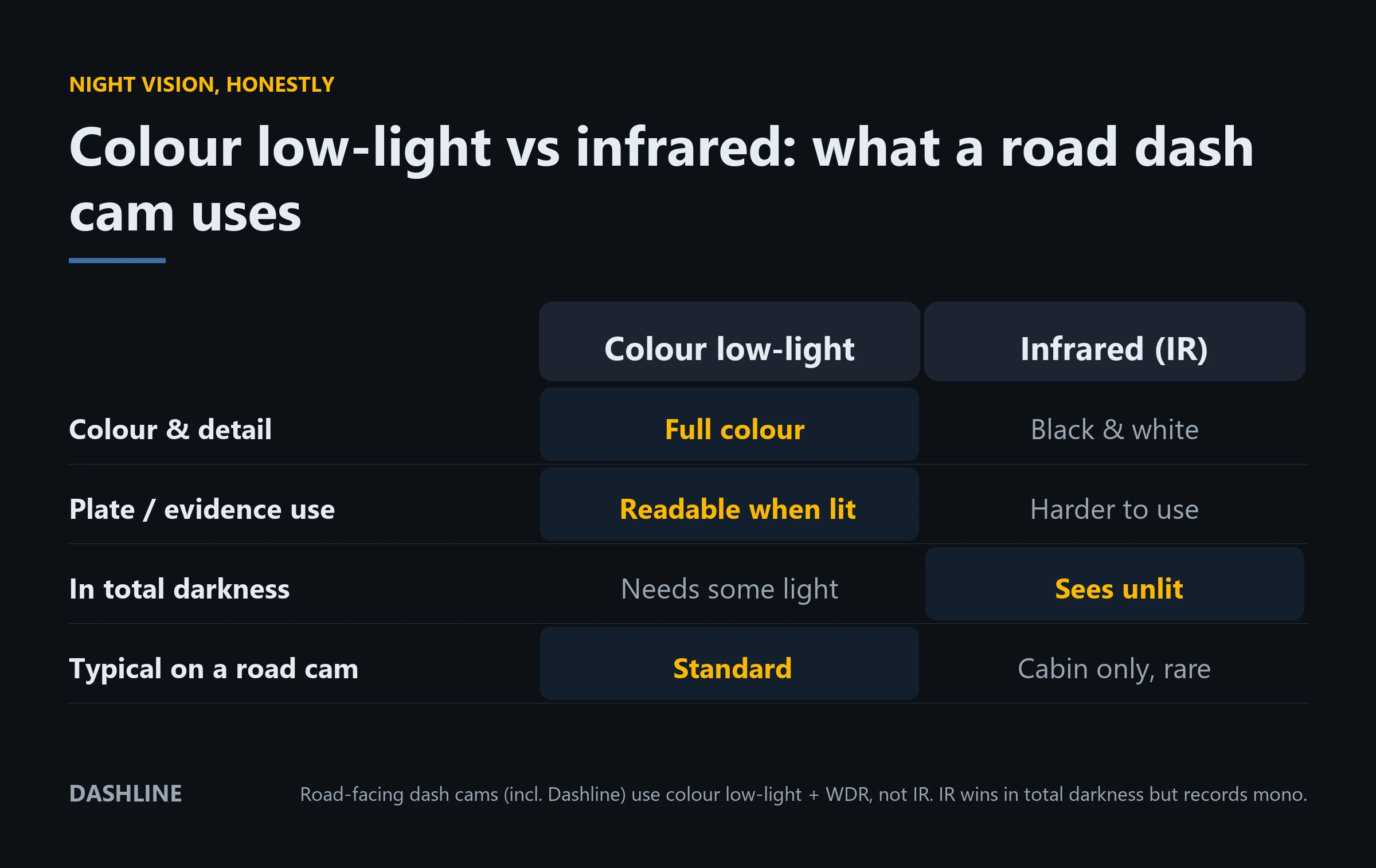
A road-facing cam captures colour low-light footage. That is better evidence than a black-and-white infrared image.
Plates get harder as light drops
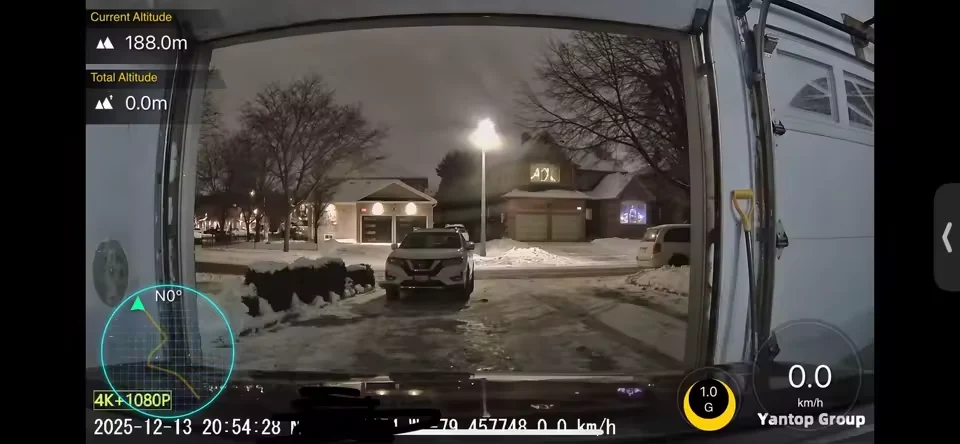
A number plate is readable when it’s lit and close. At speed, in the dark, expect a blur — from any brand.
The idea that explains everything
A night frame is a light budget
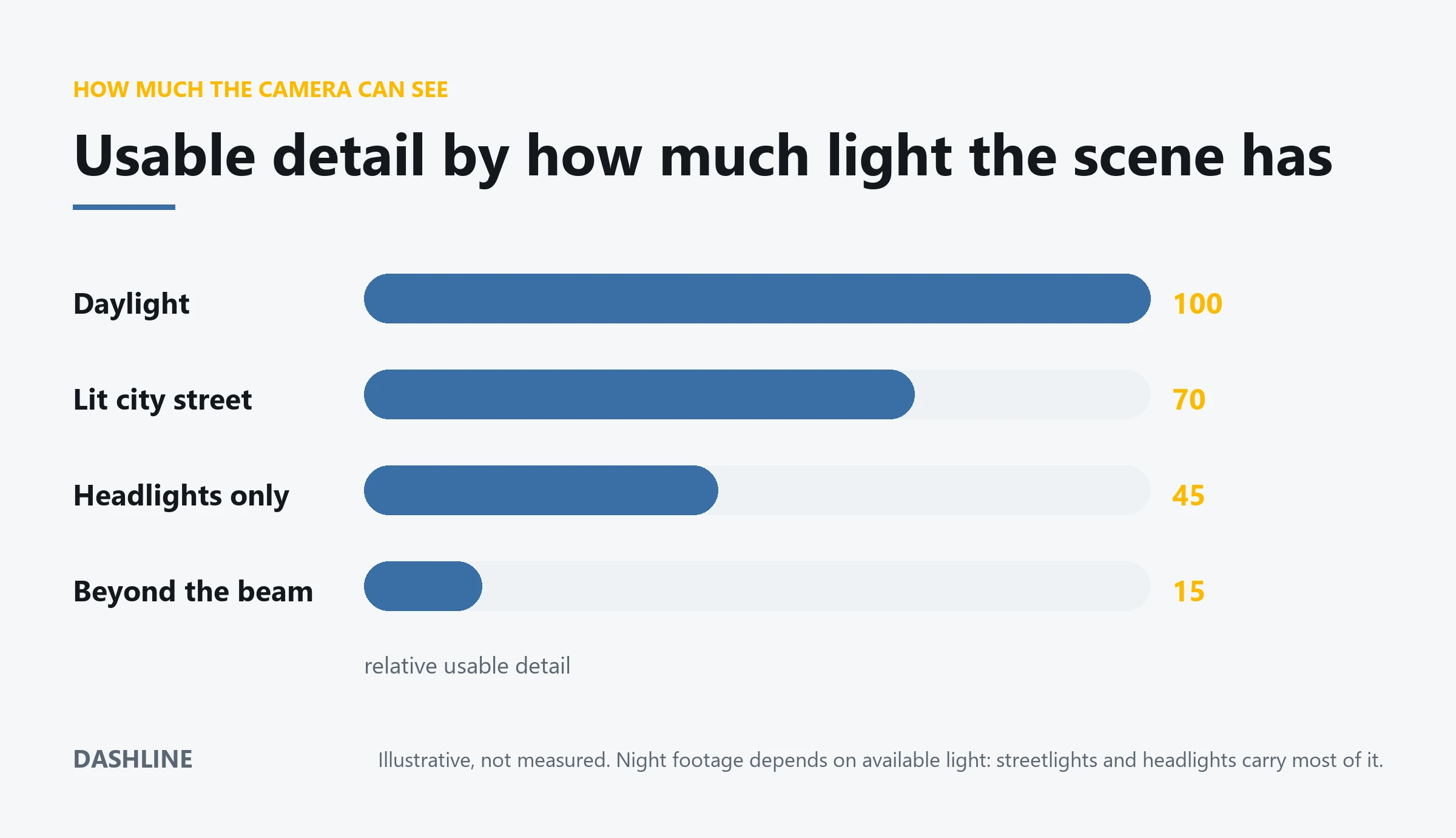
Think of every night scene as having a fixed amount of light to spend. The camera doesn’t add light — it collects what’s there and spends it as wisely as possible. Where the light comes from decides how much your footage can show.
Most of the budget
Your headlights
Bright and close, but only straight ahead and only as far as the beam reaches.
A big share
Streetlights & signs
City and lit roads fill in the sides and background your beam never touches.
A little extra
Moon & ambient
Skyglow and the moon lift an otherwise black scene — on a clear night.
The camera adds
Wide f/1.8 aperture · Light-sensitive sensor · WDR processing · Longer exposure per frame
The camera’s job is to spend a small budget well. That’s why a well-lit city street looks sharp and an unlit country lane goes dark past your headlights — same camera, very different budget.
What it is — and isn’t
Colour low-light, not infrared
People picture military-style green night vision. A road dash cam works nothing like that. It records a normal colour image and leans on processing to keep it usable — which is exactly what you want when footage has to identify a car or a plate.
The four levers
What actually decides night quality
Four specs do most of the work after dark. None of them is a magic number — but together they explain why two “4K” cameras can look very different at night.
| Spec | What it does at night | Honest note |
|---|---|---|
| Aperture (f-number) | A wider aperture (a lower number like f/1.8) lets more light hit the sensor. This is the single biggest night-vision lever. | Wider also means a little more glare from bright headlights. |
| Sensor & processing | A larger, more sensitive sensor gathers more light per pixel; on-board processing cleans up the grain that low light creates. | More processing can smear fine detail if pushed too hard. |
| WDR (Wide Dynamic Range) | Balances the brightest and darkest parts of the same frame, so headlights don’t blow out and shadows aren’t crushed. | It balances contrast; it doesn’t create light that isn’t there. |
| Resolution (4K) | More pixels resolve more detail — a plate, a face, a sign — when there is enough light to resolve. | In the dark, extra pixels mostly record more noise, not more detail. |
Set your expectations
Which night are you driving?
The honest answer to “how good is night vision?” is: it depends entirely on the light around you. Pick the scene closest to yours.
Lit city street — Streetlights every few metres
This is where night footage looks its best. Streetlights fill the whole scene, so plates, faces and colours record clearly — often close to daytime quality on nearby cars. WDR earns its keep here, taming shop signs and headlights so the frame doesn’t blow out.
Strong — usually your clearest night footage
Unlit country road — Just your headlights
Your headlights become the only light source. Everything inside the beam is recorded well; everything beyond it — the verge, a dark side road, an unlit cyclist — is very hard to capture until it’s close. No dash cam escapes this. It’s physics, not a brand limitation.
Limited — only as far as your beam reaches
Oncoming headlights & glare — Bright light into the lens
A bright light aimed at the lens is the hardest case. WDR pulls the surroundings back into view, but for the instant a full beam hits the sensor, detail near that light can wash out. The plate usually becomes readable again as the car passes and the angle changes.
Variable — WDR helps, glare still costs a moment
Parked, engine off — Overnight in a car park
In parking mode the camera relies purely on ambient light — a car-park lamp or nearby window. Under a light, you’ll get usable colour footage of anyone who approaches. In a pitch-black lot with no lamp, expect shapes and movement more than a readable plate.
Depends on the lot — a nearby lamp changes everything
Inside one frame
How your camera builds a night frame
Every 1/30th of a second, your dash cam repeats the same three steps. Understanding them is understanding night vision.
1
Gather the light
The wide aperture opens up and the sensor collects every photon it can from headlights, streetlights and the sky.
Aperture & sensor
2
Balance the scene
WDR blends a brighter and a darker read of the frame, so glare is held back and shadows are lifted at the same time.
WDR
3
Clean & encode
Processing reduces grain, then the frame is written to the card at a set bitrate — the higher the bitrate, the more night detail survives.
Bitrate
The honest ceiling
The light in the scene sets the ceiling
No spec sheet beats the amount of light actually present. As the scene gets darker, every camera — yours, ours, a premium one — has less to work with. The drop-off is steep once you pass the reach of your headlights.
The honest limits
What night vision can’t do
Anyone who promises footage that is “clear in every situation” after dark is overselling. Here’s where even good night vision runs out.
Beyond the beam, it’s dark
On an unlit road, the camera can only record what your headlights reach. A dark verge or an unlit side turning stays hidden until it’s close.
Plates blur at speed
A plate is readable when it’s lit, close and slow-moving. Combine darkness, distance and speed and even 4K gives you a smear. More on reading plates at night →
Low light means more noise
In the dark the sensor amplifies what little signal it has, which adds grain. Processing hides some of it, but fine detail is the first thing to go.
There’s no thermal or X-ray mode
A dash cam can’t see through darkness, fog or a tinted window. It sees the same light your eyes do — just recorded, timestamped and kept.
How Dashline handles the dark
Built to spend the light well
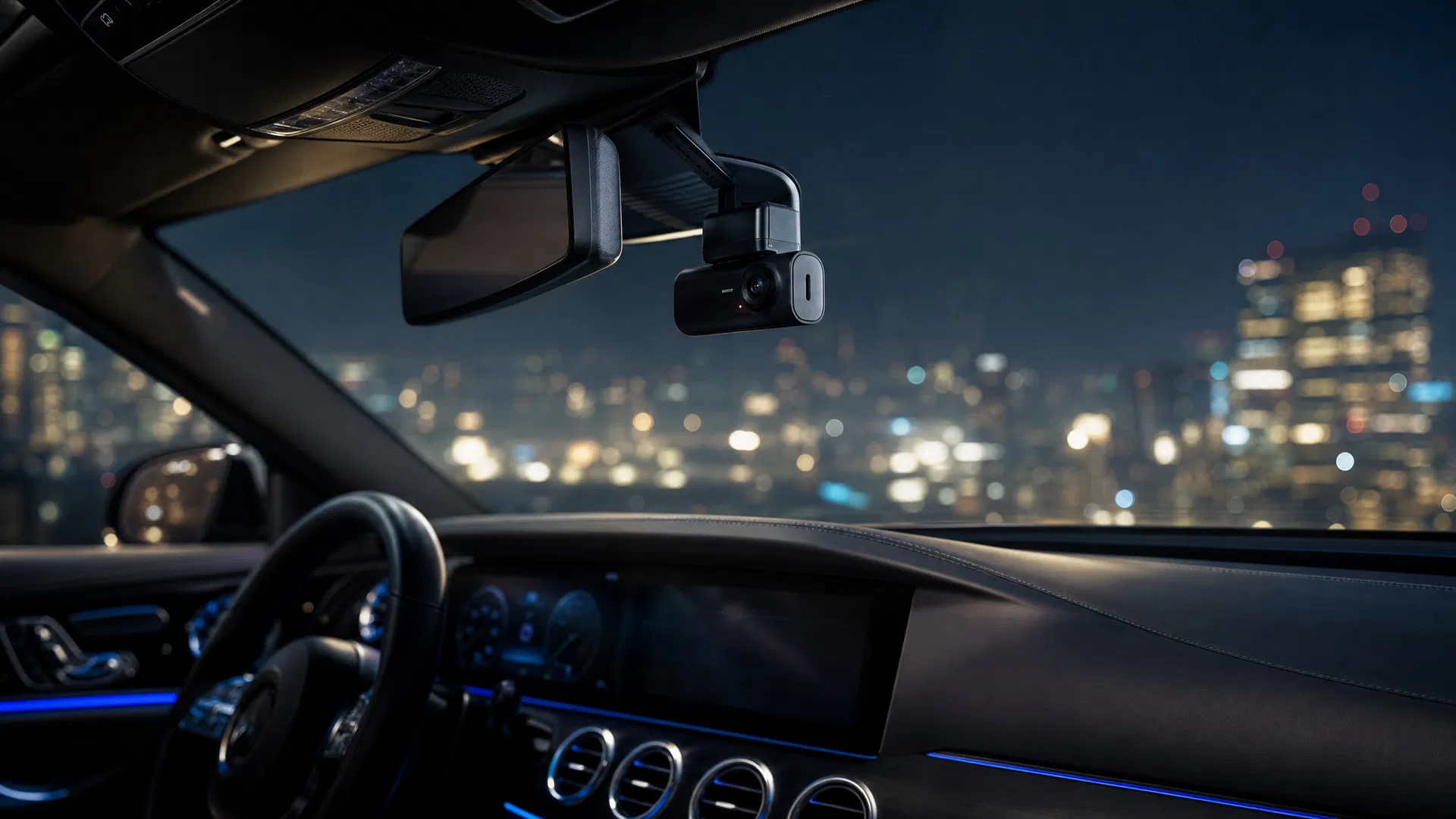
The Dashline 4K uses the same honest toolkit this page describes — no gimmicks, just the levers that matter after dark.
- Wide-aperture lens to pull in available light
- WDR to tame headlight glare and lift shadows
- True 4K, so lit plates and signs stay legible
- Colour low-light footage — stronger evidence than infrared
- 170° view to keep side-street light in frame
It won’t light up a pitch-black field — nothing will. It’s built to give you usable, colour, timestamped footage everywhere there’s light to work with. See it in context on our best 4K dash cam for night driving guide.
Choose your coverage
One camera, three levels of cover
The same night-vision hardware in every option. Pick how much of the car you want watched.
Standard
Front only
€85.95
- 4K front camera
- WDR night vision
- 170° wide view
- Loop recording + app
Most popular
Dual Cameras
Front + rear
€112.95
- Everything in Standard
- Rear Sony-sensor camera
- Night coverage behind you
- Full front & rear record
Full Protection
Front + rear + 24h
€121.55
- Everything in Dual
- 24-hour parking kit
- Watches while parked
- Complete peace of mind
Free shipping
On every order
Secure payment
Encrypted checkout
2-year warranty
Cover as standard
30-day returns
No-risk trial
Common questions
Night-vision FAQ
Can a dash cam really see in the dark?
Not in true darkness. A dash cam records the light that’s already there — headlights, streetlights, the moon — and uses a wide aperture, a sensitive sensor and WDR to make the most of it. On a lit street that looks excellent; on a pitch-black lane it only sees as far as your headlights reach.
What does WDR do for night footage?
WDR (Wide Dynamic Range) blends a brighter and a darker version of each frame so that bright headlights don’t blow out and dark areas aren’t crushed to black. It balances contrast in a high-glare scene — it doesn’t add light that isn’t there.
Is 4K worth it for night driving?
Yes, but with a caveat. Extra resolution helps you read a lit plate or sign at night — but only where there’s enough light. In very dark scenes, aperture and sensor sensitivity matter more than pixel count. 4K is a benefit, not a night-vision cure-all.
Does a dash cam use infrared night vision?
Road-facing dash cams, including Dashline, use colour low-light recording rather than infrared. Colour footage is far more useful as evidence — it captures the actual colour of a car or clothing. Infrared is mostly used on interior cabin cameras and records in black and white.
Can it read a number plate at night?
Often yes, when the plate is lit, close and not moving fast — plates are reflective and catch your headlights well. Combine darkness, distance and speed and it becomes a blur, on any camera. You can see real examples in our day-to-night footage guide.
Why does my night footage look grainy?
In low light the sensor has to amplify a weak signal, and that amplification shows up as grain or noise. It’s normal and affects every camera. More light in the scene — or parking under a lamp — is the most effective fix.
When it matters most
Built to make the most of the dark
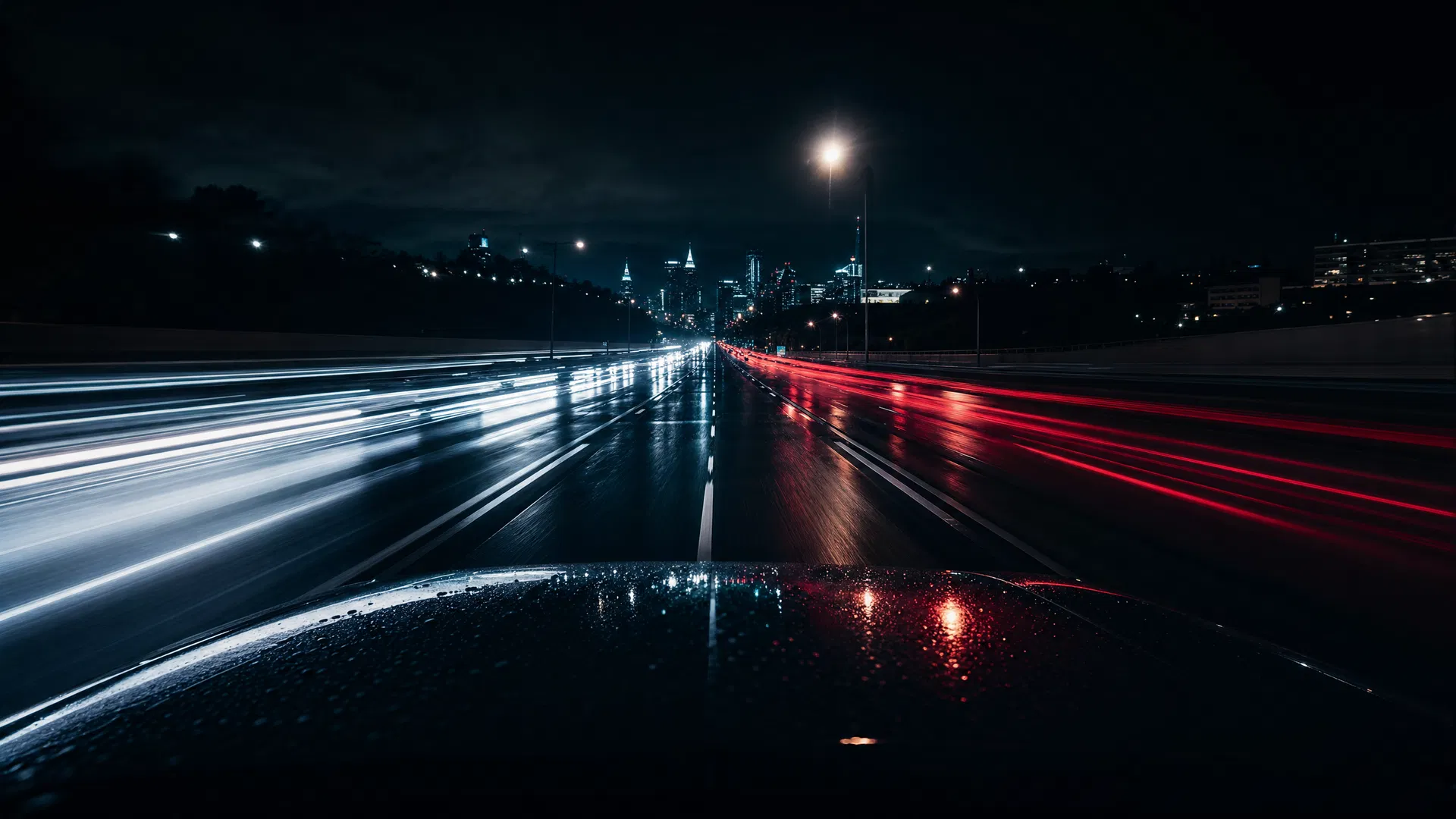
Night is when a disputed incident is hardest to prove — and when honest, colour, timestamped footage is worth the most. See exactly what the Dashline 4K captures after dark.
Leave a Reply