
▮ REC ● 4K UHD · DAY → NIGHT
What dash cam footage really looks like
Marketing clips are always shot on a sunny afternoon. Here is the honest version — real Dashline footage from bright daylight to a dark winter street, and exactly what changes in between.
The reality check
The demo is always sunny. Real driving isn’t.
Most dash cam ads loop the same golden-hour highway. Your week looks different: a low sun in your eyes at 5pm, rain on the glass, an unlit road home. What you actually capture depends on the light far more than the megapixel number on the box. So before buying on a spec sheet, look at the footage — across the conditions you actually drive in. A camera that looks flawless in a sunny showroom demo can fall apart on a dark street, and the gap between cameras is widest exactly when you need the clip most: at night, in the rain, or facing a glare of headlights.
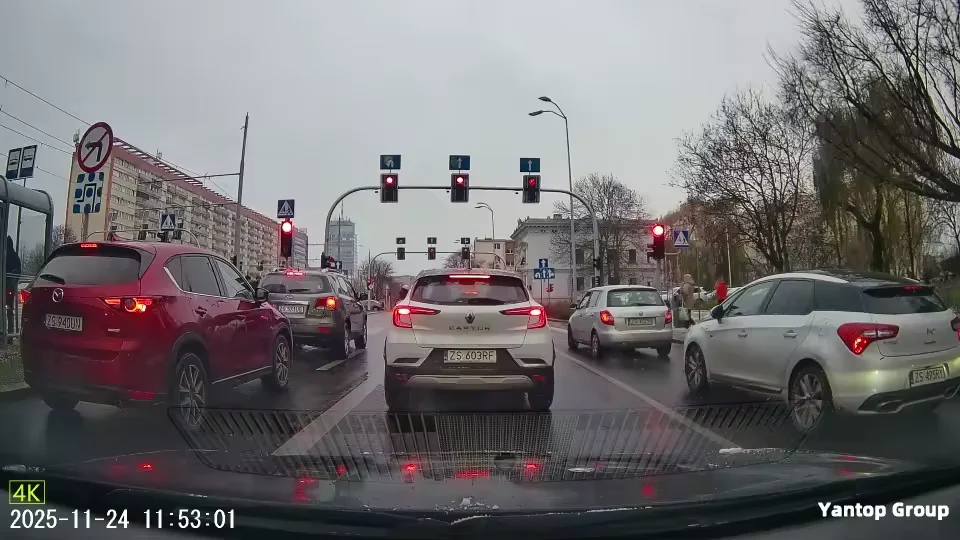
Daylight
Easy mode — sharp detail and readable plates at sensible distances.
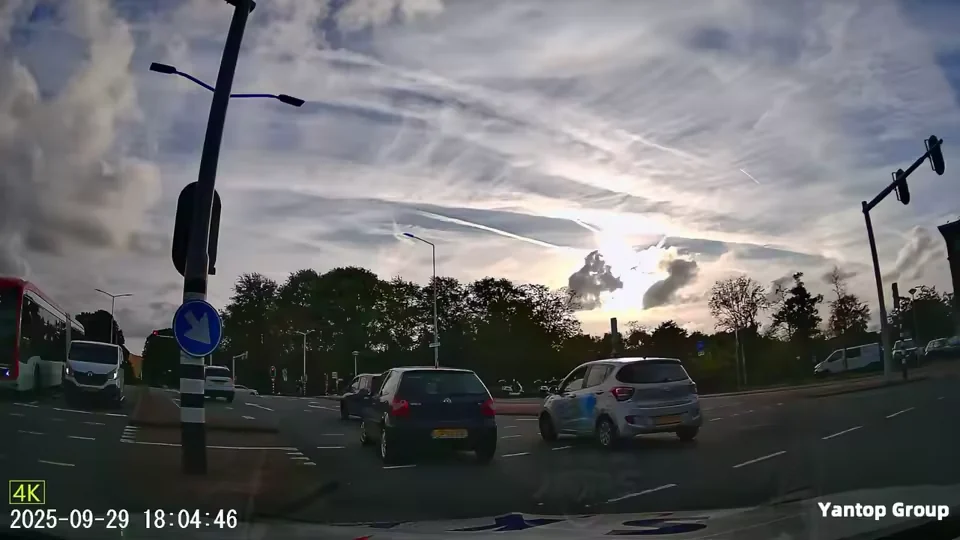
Dusk & backlight
The dynamic-range test — bright sky against a dark road in one frame.
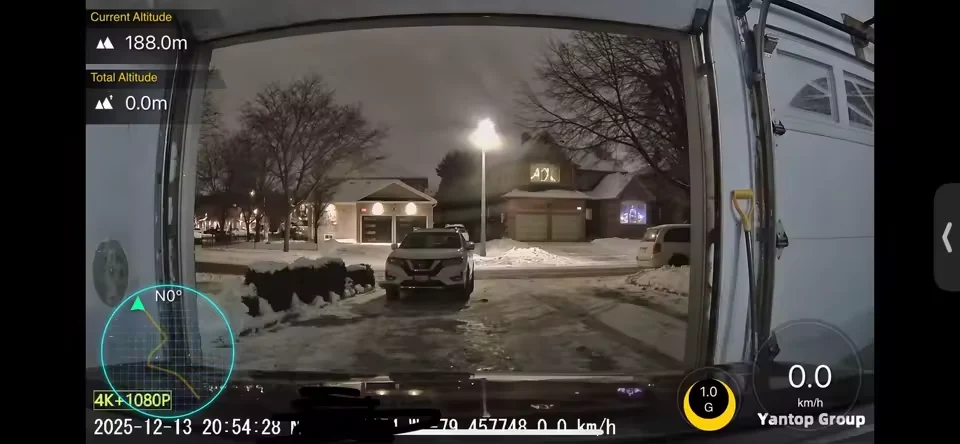
Night
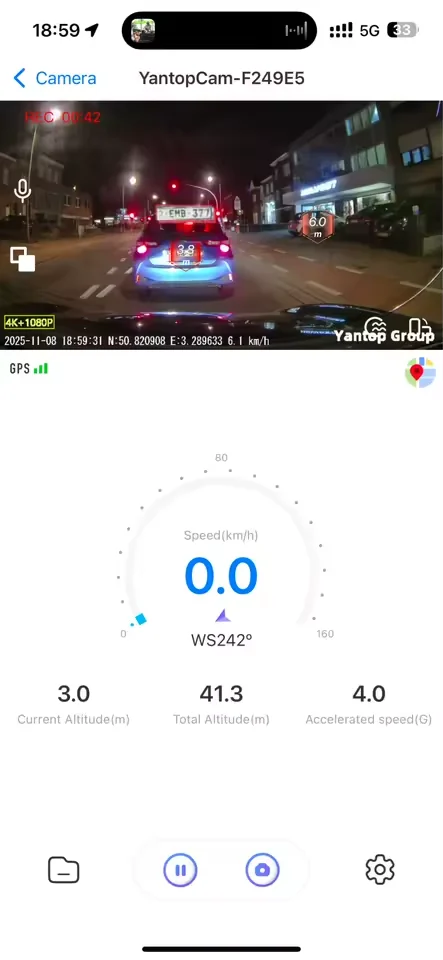
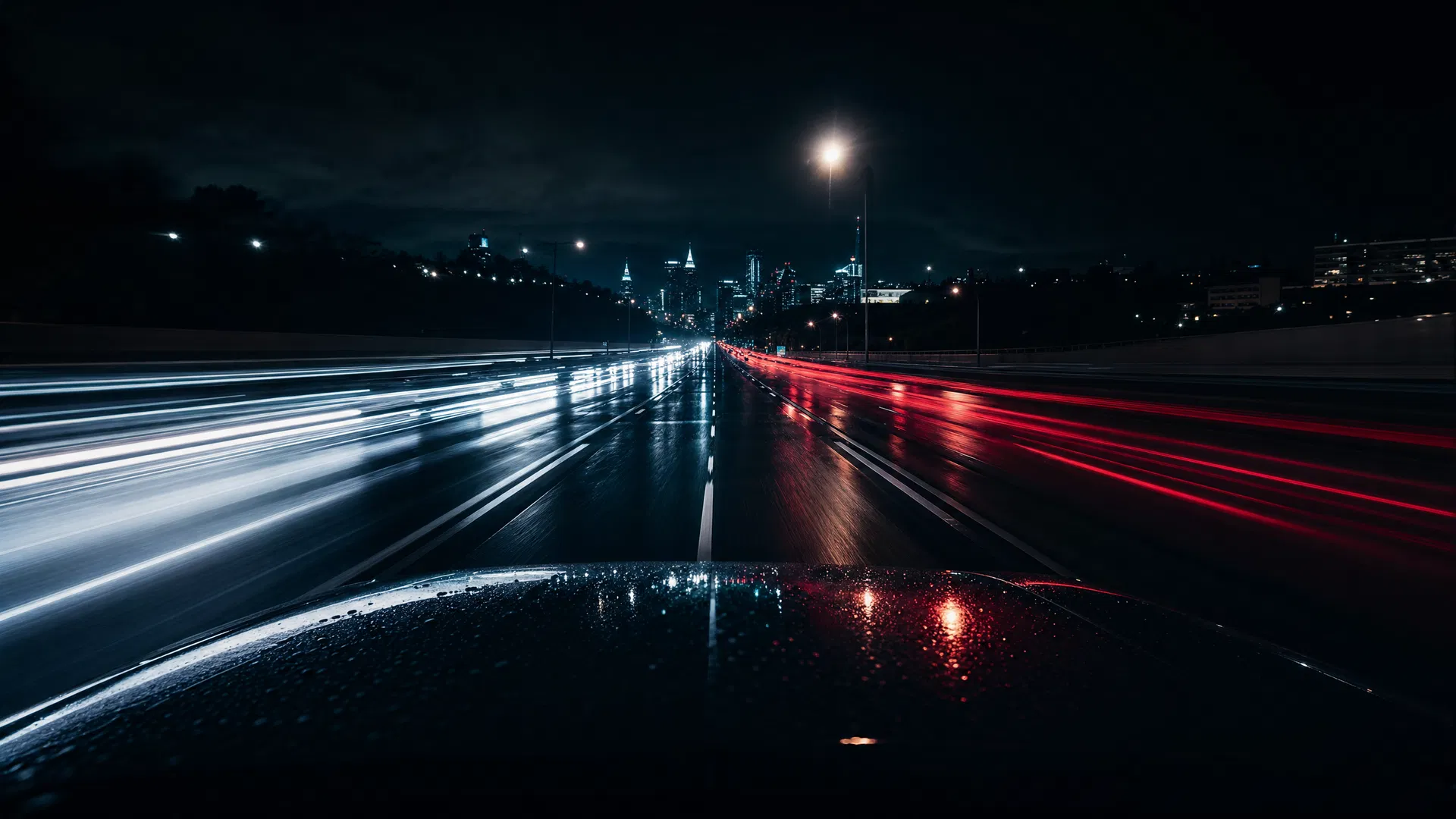
The real test — great near light, harder in true darkness.
Day → Night · same camera
Drag from day to night
Two ends of the same drive, straight off the camera. Drag the handle to wipe between them.
 Night
Night
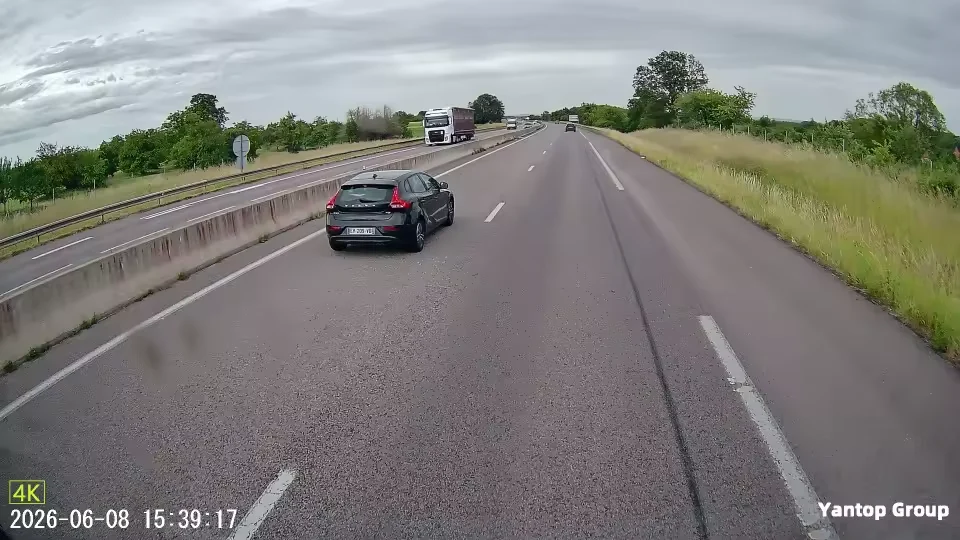
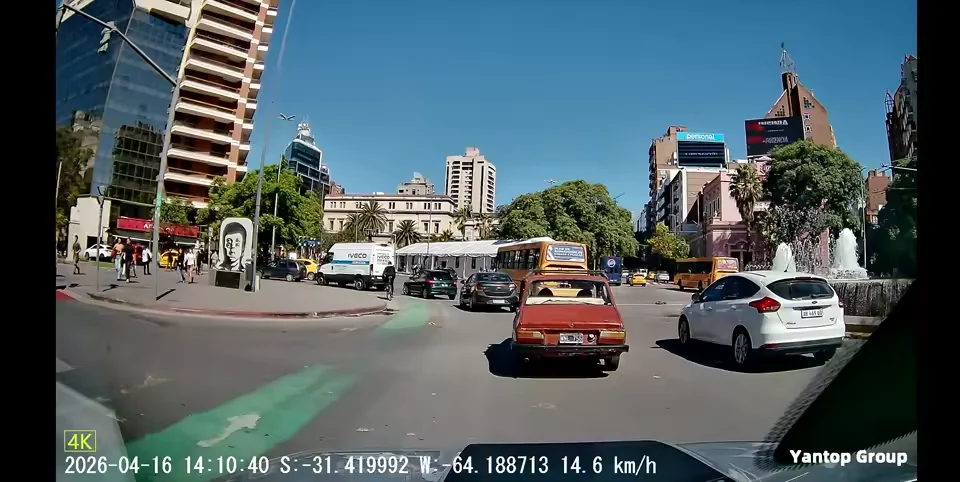
Left: 4K daytime highway — lane lines, signage and plates are sharp. Right: the same sensor on a snow-lit street after dark — bright areas stay clear, deep shadow gets softer and noisier. That trade-off is physics, not a defect — and it is why WDR and a fast lens matter more than a big megapixel claim. Notice what survives the dark: the lit road surface, the truck under the streetlight, the house lights. What softens is the unlit edges of the frame — the parts no dash cam can light up on its own.
The 20-second reality
How clear your clips are, condition by condition — honestly.
Daylight
Sharp detail; plates readable at sensible distances.
Dusk & backlight
WDR balances a bright sky against a dark road.
Night near light
Streetlights, headlights and lit signs read well.
Deep dark / unlit
Far detail and distant plates drop in true darkness.
No dash cam beats physics: light in, detail out. The difference between cameras is how much detail they hold when the light gets hard.
Footage across conditions
More than a sunny highway
Real frames from the camera — backlight, telemetry and a live night feed.
From light to evidence
How a usable clip is made
Footage quality is a chain. A weak link anywhere shows up first at night.
Gather the light
A Sony-class sensor and a fast F1.6 lens collect as much light as possible. In the dark, this matters more than any other spec.
Balance the scene
WDR exposes a bright sky and a dark road in the same frame, so neither washes out at dusk or under streetlights.
Record in real 4K
High-bitrate 3840×2160 keeps small details — plates, signage, lane markings — intact when you zoom into a clip later.
Stamp the context
Time, date, speed and GPS coordinates are written onto every frame, so a clip stands up as evidence.
The camera behind the clips
One camera, tuned for the hard light
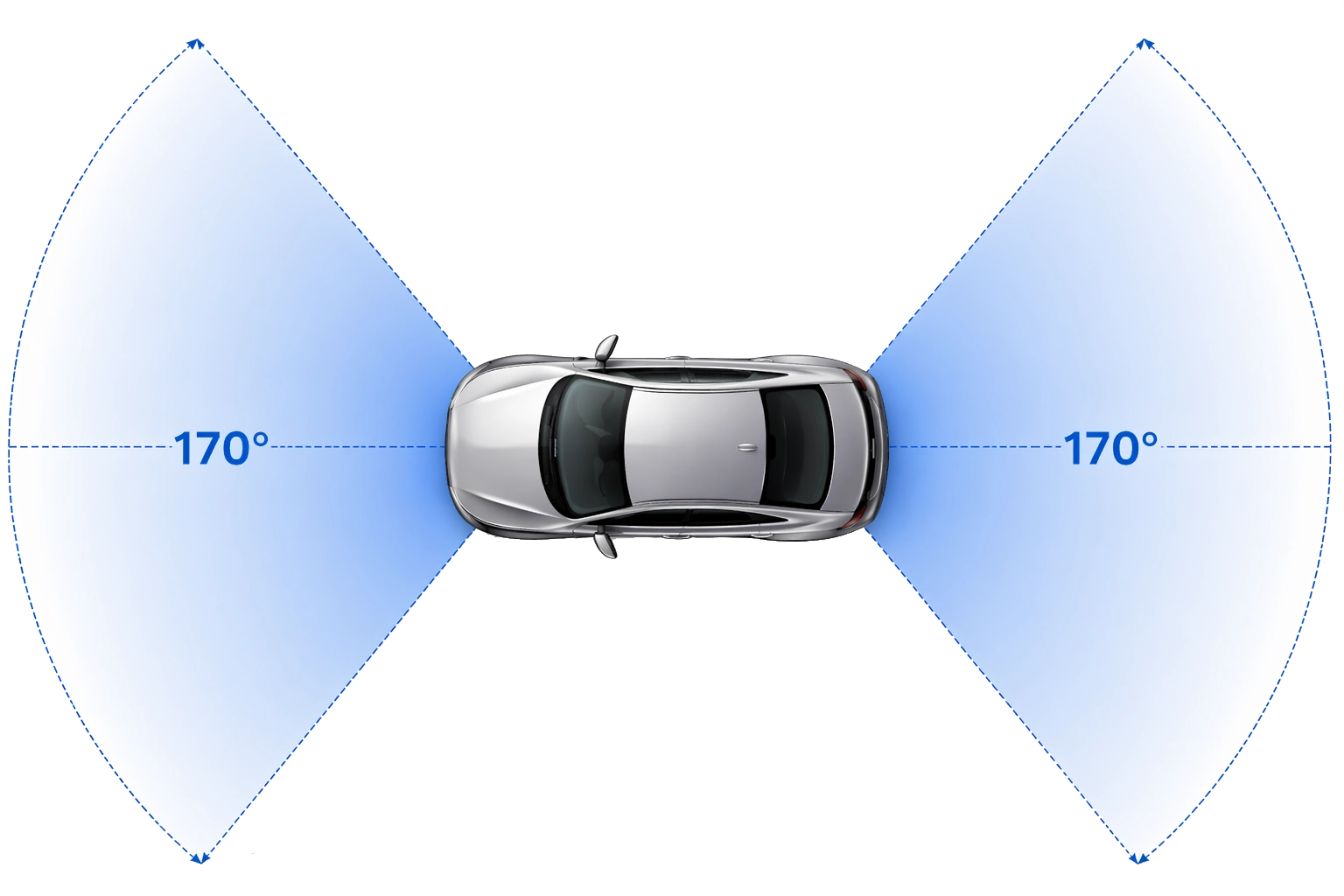
The Dashline 4K shoots true 3840×2160 through an F1.6 six-element lens with a roughly 140° field of view, plus built-in WDR and GPS. It is one camera, not a catalogue — set up to hold detail exactly where footage usually falls apart: low light and high contrast. None of that makes the dark disappear, but it is the combination that decides how much of a clip is still usable when the sun is gone.
What footage can’t promise
Honesty is the point of this page. Here’s where any dash cam — including ours — has limits.
Plates aren’t guaranteed
Reading a plate depends on speed, distance, angle and light. A slow, well-lit plate reads best; a fast car in the dark may not. More on this: can a dash cam read plates at night? →
True darkness is the limit
On an unlit rural road with no streetlights, every dash cam loses far detail — headlights help up close, distance gets noisy. If most of your driving is after dark, start with the best setup for night driving →.
Bright lights can bloom
Oncoming high beams and wet-road glare can flare. WDR reduces it; no sensor removes it completely. It’s a limit of optics, not a fault.
Audio & privacy are on you
Cabin audio and rear-facing recording carry local legal rules. Tell passengers, and check what’s allowed where you drive.
Choose your coverage
How much road do you want on record?
Same 4K core in every option. Add a rear camera or 24-hour parking when you need it.
Choose your setup
One camera. Three levels of protection.
From everyday recording to full 24/7 surveillance — pick the package that matches how you drive.
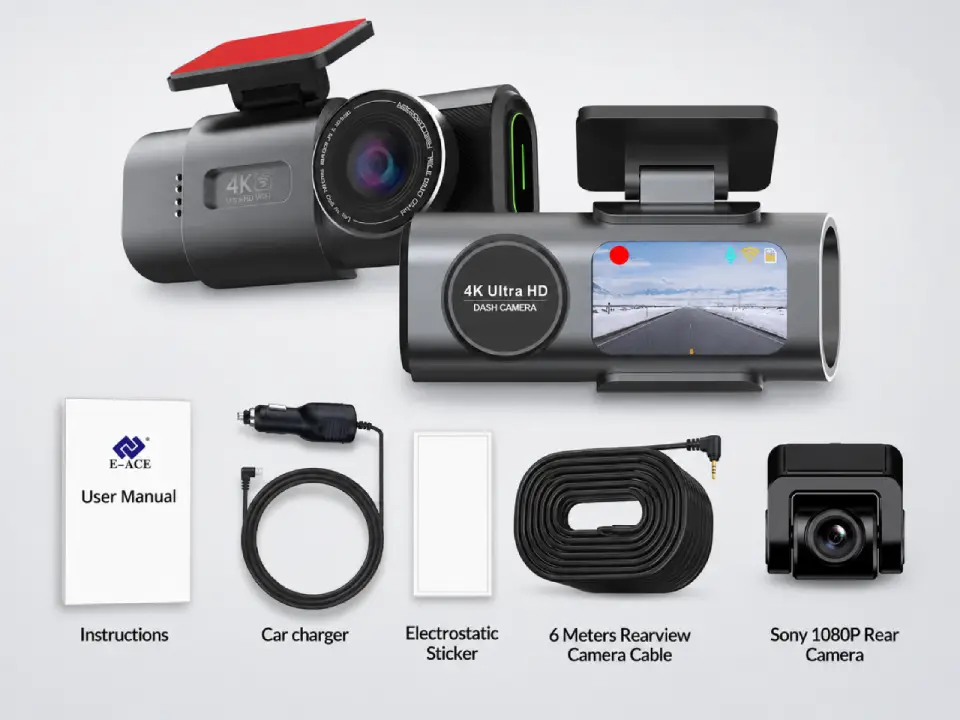
Standard
Package contents
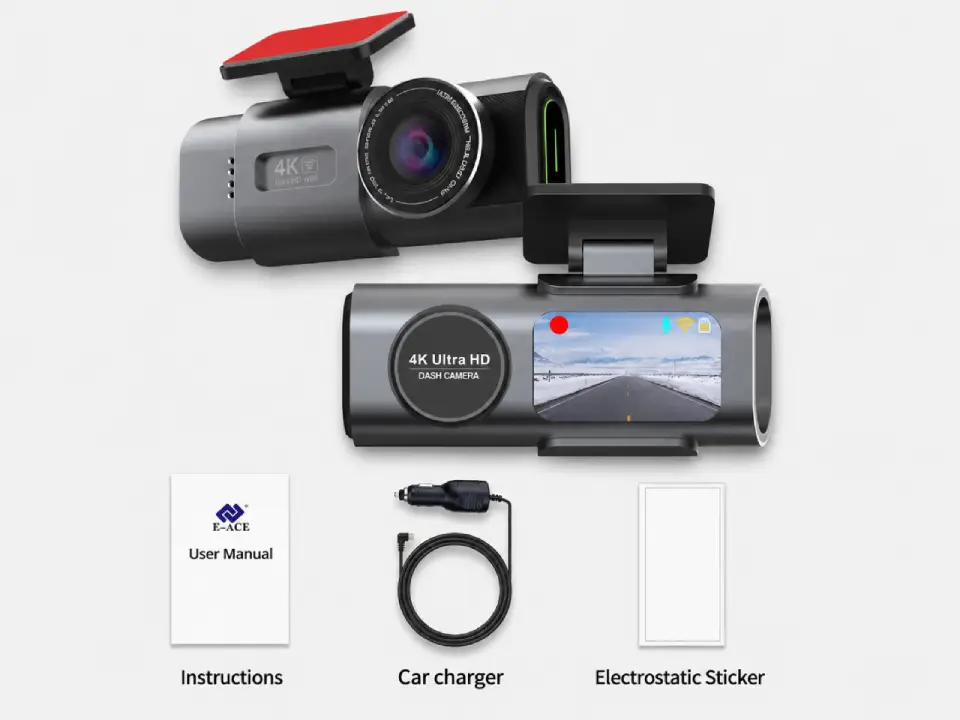
- Front camera
- Car connection cable
- Magnetic sticker
Most popular
Dual Cameras
Package contents
- Everything in Standard
- Sony rear camera
- 6-meter connection cable
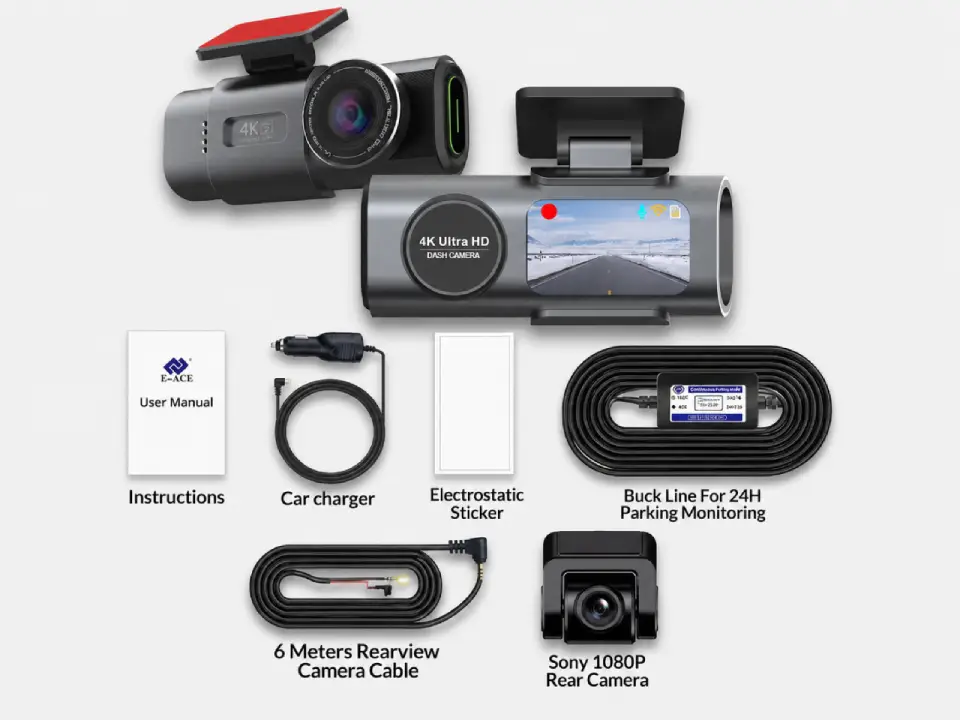
Full Protection
Package contents
- Everything in Dual Cameras
- 24h-compatible battery
- Live view from parked car
Free Shipping
5–10 days across Europe
Secure Payment
Apple Pay · PayPal · Stripe
2-Year Warranty
Full hardware coverage
30-Day Return
No questions asked
Footage questions, answered
The honest answers behind what your clips will and won’t show.
Is dash cam footage clear enough to be useful at night?
Near light — streetlights, headlights, lit signs — yes, it’s clear and usable. On a completely unlit road, every dash cam loses far detail, so expect strong nearby footage and softer distance.
Does 4K really matter, or is 1080p fine?
4K matters most when you zoom in. A plate or a face that’s a blur in 1080p can stay readable in 4K. For everyday proof, both work; for detail at distance, 4K holds up better.
Can it actually read license plates?
Sometimes — it depends on speed, distance, angle and light. Slow and well-lit reads best; fast and dark is the hardest case. Treat plate capture as likely, not guaranteed.
What is WDR and why does it matter?
Wide Dynamic Range balances bright and dark parts of the same frame. It’s what keeps a sunset or a streetlit road from blowing out — and it matters more for real footage than a big megapixel number.
Does the footage show speed and location?
Yes. Every clip is stamped with date, time, speed and GPS coordinates, which is what turns a video into evidence.
How long is footage kept?
The camera loop-records and overwrites the oldest clips once the microSD card is full. Back up any clip you want to keep — it isn’t stored forever.
Can I watch the footage on my phone?
Yes, over the camera’s local WiFi in the app — including a live view. There’s no subscription and no cloud fee.
Is front-only footage enough, or do I need a rear camera too?
Front-only covers what you drive into — most incidents. A rear camera adds the story behind you: who hit you from the back, tailgaters, and parking knocks. If your footage is mainly for accident proof, front is a strong start; add rear when the back of the car matters to you.
Every drive is footage worth keeping
Real 4K, day and night. Subscription-free local storage, WDR and GPS on every clip.
Free shipping · 2-year warranty · 30-day returns
Leave a Reply