4K Front + Rear Protection
Best 4K Front and Rear Dash Cam for Everyday Drivers
If you are searching for the best 4K front and rear dash cam, you are probably not looking for another gadget. You are looking for proof, protection, and a camera setup that can document what happens in front of your vehicle and behind it when the road gets unpredictable.
Free EU shipping · 30-day return · 2-year warranty · Front camera from €85.95
True 4K front detail
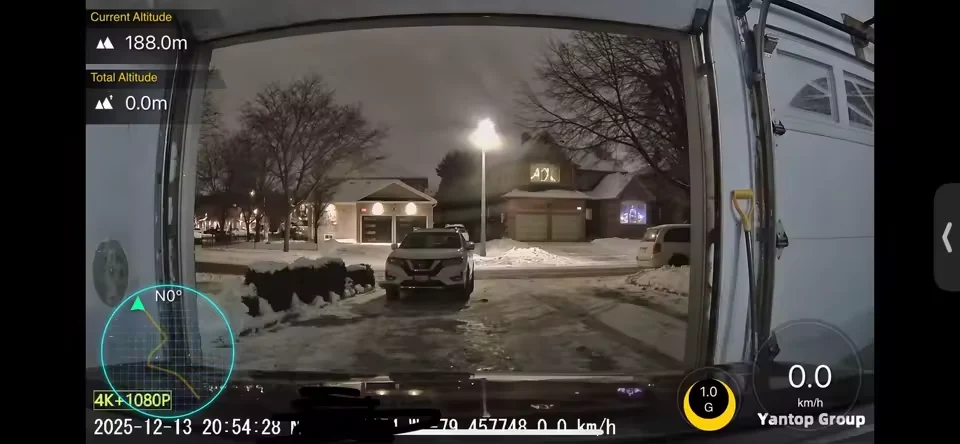
Dashline records the front road in 4K Ultra HD, giving you more usable detail than standard HD when you need to review signs, lane position, vehicle color, and impact direction.
Optional rear camera
Rear coverage matters in tailgating, rear-end impacts, parking incidents, and lane-change disputes. A front-only dash cam can miss the moment that explains why the incident happened.
WiFi, GPS and evidence
Built-in WiFi, GPS support, loop recording, and G-sensor protection make it easier to find, save, and share footage when an ordinary drive becomes an insurance claim.
Why “front and rear” is the smarter 4K dash cam setup
Most drivers start by asking whether 4K is worth it. The better question is whether your camera sees enough of the story. A high-resolution front camera helps with detail, but front and rear coverage gives you context: what approached, what followed, what changed lanes, and what happened after the first impact.
Independent dash cam buying guides consistently evaluate more than resolution. They compare image quality, setup, GPS, WiFi, night performance, and the ability to capture usable details such as license plates and vehicle movement.[1] Specialist dash cam reviewers also emphasize parking security, fraud protection, heat reliability, front/rear coverage, and the value of footage that can be reviewed quickly after an incident.[2] This is exactly where a well-balanced 4K front and rear system makes sense: it is not only about sharp video, but about useful evidence.
Dashline is built around that practical need. The front camera records in True 4K Ultra HD, the wide 170° view captures a broad section of the road, the Sony IMX415 sensor supports strong low-light performance, and WDR helps balance bright headlights with darker road detail. Add the optional rear camera, and you gain a more complete record of daily driving, highway commutes, rideshare work, parking areas, and family trips.
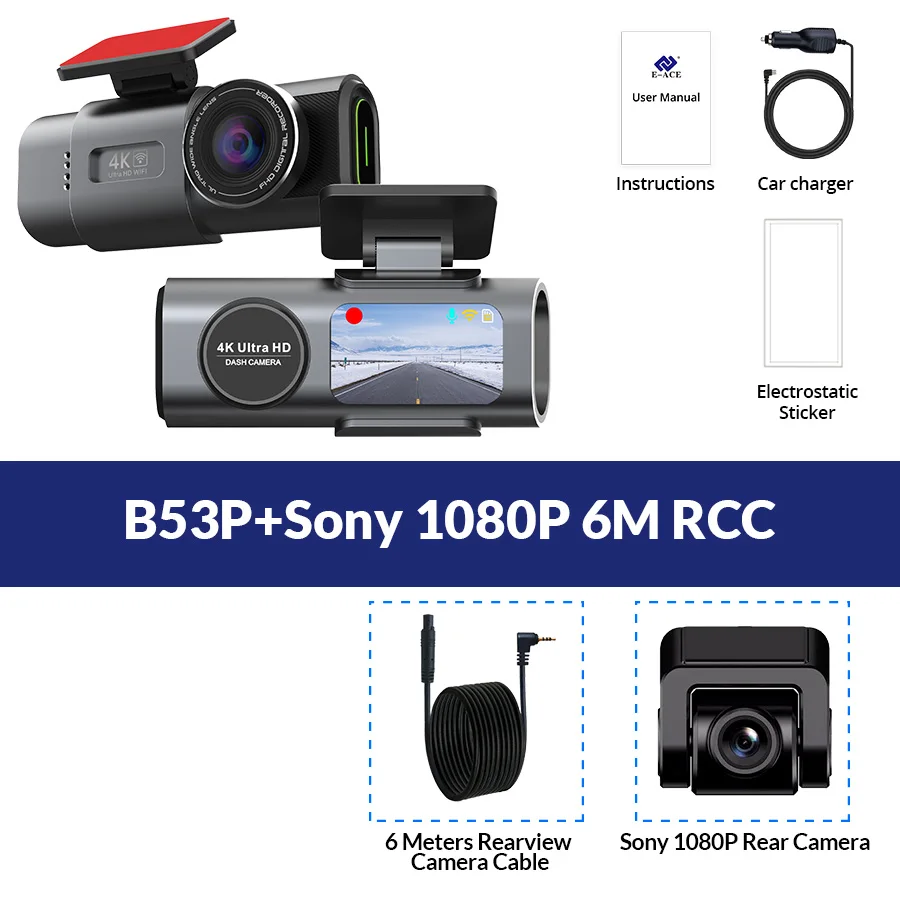
A 4K dash cam should make evidence easier to understand
When footage is reviewed after a collision, small details can matter: brake lights, road markings, vehicle position, traffic signals, and the direction from which another car entered the frame. 4K resolution gives the front camera more pixels to work with, while the rear camera helps show what happened behind you. Together, they reduce the gaps that often make a video less useful.
- Front evidence: lane position, road signs, traffic lights, and vehicles ahead.
- Rear evidence: tailgating, rear impacts, parking contact, and vehicles approaching from behind.
- Connected review: WiFi and app access help you preview, download, and share clips more easily.
- Protected moments: loop recording and G-sensor locking help preserve important files.
What to look for in the best 4K front and rear dash cam
A good buying decision comes from matching technical features to real driving situations. The table below explains why each feature matters and how Dashline answers that requirement.
| Buying criterion | Why it matters | Dashline advantage |
|---|---|---|
| Front resolution | Higher detail helps when reviewing vehicles, lane position, signs, and impact sequence. | True 4K Ultra HD front recording, 3840×2160. |
| Rear coverage | A rear camera adds context for tailgating, rear-end impacts, and parking incidents. | Optional Sony rear camera with long connection cable. |
| Night performance | Dark roads, headlights, and reflective plates are difficult for small cameras. | Sony IMX415 sensor, F1.6 lens, WDR, and enhanced low-light recording. |
| Wide angle | A wider view captures adjacent lanes and more of the incident scene. | 170° front wide-angle coverage. |
| GPS and WiFi | GPS adds route context; WiFi makes footage easier to review and download. | Built-in WiFi and GPS support with mobile app control. |
| Daily reliability | The best camera is the one that records automatically every time you drive. | Loop recording, G-sensor emergency lock, and discreet OEM-style installation. |
Built for the moments drivers actually worry about
Insurance disputes
When two drivers remember the same event differently, front and rear footage can clarify sequence, direction, and relative position. That can make your version of events easier to document.
Hit-and-run incidents
A 4K front camera improves detail, while a rear camera may catch the vehicle as it leaves or approaches. It is not magic, but it gives you more angles and more chances to capture useful context.
Parking and rear contact
Rear-facing coverage is especially valuable when another vehicle bumps, reverses, or passes close behind your car. Optional parking monitoring adds another layer of protection when installed appropriately.
THE REAR-VIEW LEDGER
What front-only misses, incident by incident
Five everyday incidents, and what each camera setup actually captures. This is the honest core of the decision.
Someone rear-ends you at a light
FRONT-ONLY
Records the impact and your view forward, but not the car that hit you or its plate.
REAR ADDS
Captures the vehicle behind, the closing speed and the plate, so fault isn’t your word against theirs.
A tailgater rides your bumper
FRONT-ONLY
You feel it, but there’s no footage of how close they were or what they did.
REAR ADDS
Logs the following distance and any brake-check or swerve, useful evidence in a road-rage dispute.
A hit-and-run to your parked bumper
FRONT-ONLY
Front camera may miss it entirely if the hit comes from behind while parked.
REAR ADDS
With parking mode, the rear can catch the bump and the leaving car’s plate.
You get reversed into in a car park
FRONT-ONLY
Depends on angle; a rear knock is often out of a front lens’s view.
REAR ADDS
Points straight at the most common low-speed parking damage.
A driver follows you after an incident
FRONT-ONLY
No record of who or what is behind you.
REAR ADDS
Keeps a timestamped, GPS-tagged record of the vehicle behind.
Front-only isn’t “bad” here, it’s just aimed forward. Every row above is a rear-facing event. If none of them describe your driving, front-only may be all you need. If several do, that’s the rear camera paying for itself.
Honest answer: can a 4K front and rear dash cam always read plates?
No dash cam can guarantee perfect license plate capture in every situation. Speed, distance, rain, dirty glass, headlight glare, plate angle, compression, and exposure settings all affect readability. A good 4K camera improves your chances because it starts with more detail, but the realistic goal is stronger evidence, not impossible perfection.
This is why Dashline combines several practical elements instead of relying on a single specification. The Sony IMX415 sensor supports low-light capture, WDR helps manage bright and dark areas, the F1.6 lens gathers more light, and the wide-angle view records more of the scene. For the best results, mount the camera high and centered, keep the windshield clean, avoid pointing the lens too far downward, and use a high-quality microSD card within the supported capacity.
Practical rule: choose 4K for detail, choose front and rear for context, and choose WiFi/GPS for easier evidence management.
Dashline 4K: front-first clarity, rear-ready protection
Dashline is designed for drivers who want premium protection without a complicated installation. The front camera sits discreetly near the windshield, records automatically, and connects to the Viidure mobile app for live view, playback, and downloads. You can start with the standard front camera or choose a dual-camera bundle for wider evidence coverage.
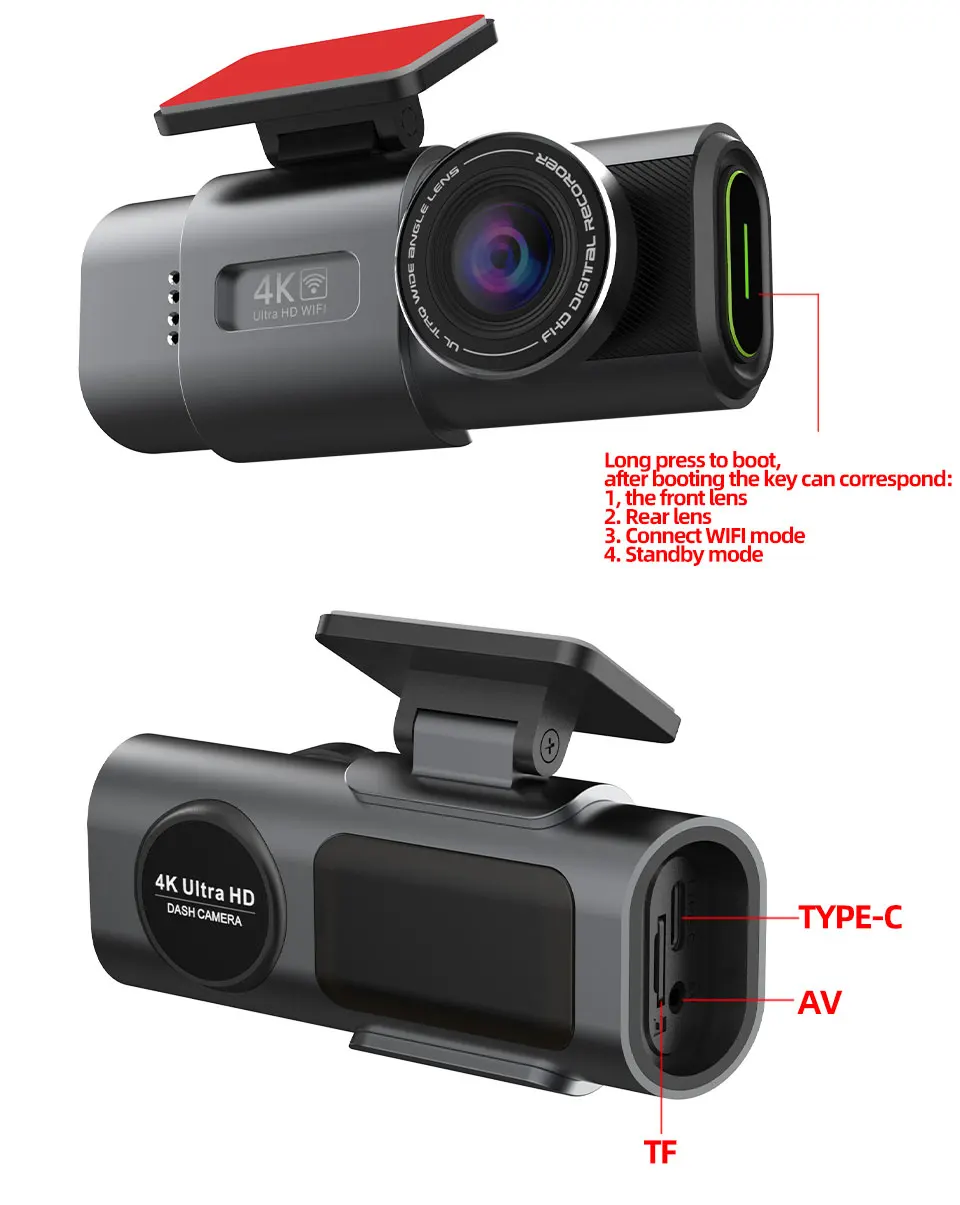
How to choose the right Dashline 4K bundle
The best 4K front and rear dash cam is not necessarily the most expensive one. It is the setup that matches your daily risk. A driver who mainly commutes on familiar roads may only need a strong front-facing 4K camera with clear footage, WiFi access, and emergency file locking. A driver who parks on the street, drives long distances, carries passengers, or often deals with dense traffic will usually benefit more from rear coverage because incidents can happen from behind as easily as from the front.
If you are buying your first dash cam, begin by thinking about your most likely incident. For highway driving, a front 4K camera captures the road ahead, sudden braking, lane changes, and traffic conditions before impact. For city parking, rear footage and parking monitoring become more important because low-speed contact, reversing vehicles, and close passing can happen when you are not inside the car. For family vehicles, a dual-camera setup creates a more complete record without requiring anyone to remember to start recording manually.
Choose front 4K if…
You want a clean, discreet, high-detail camera for everyday protection, easy app access, and evidence for what happens in front of your vehicle. This is the simplest way to upgrade from no camera or an older 1080p unit.
Choose front + rear if…
You want wider evidence coverage for rear-end collisions, street parking, tailgating, and disputes where the full sequence matters. Still deciding if you need the rear camera? The scenarios above cover exactly that. This is the better setup for drivers who want less uncertainty after an incident.
Installation details that affect real-world video quality
Camera specifications matter, but installation quality can decide whether footage is genuinely useful. A 4K sensor cannot compensate for a dirty windshield, a lens aimed too high, or a cable installation that makes the camera inconvenient to use. For the best view, the front camera should usually sit high on the windshield, close to the rear-view mirror, with the lens pointed toward the road ahead rather than too much sky. This helps the camera expose for the traffic scene instead of bright clouds or streetlights.
Rear camera placement also matters. Mounting it in the rear window with a clean view gives the camera a better chance of recording vehicles approaching from behind. The included or optional rear camera cable should be routed safely along trim areas so it does not interfere with airbags, pedals, passenger movement, or visibility. If you want parking monitoring, a proper hardwire installation is usually the cleanest solution because it avoids loose cables and allows the camera to receive power while the car is parked.
Storage is another overlooked part of the system. Use a reliable microSD card that matches the supported capacity and is suitable for continuous recording. Loop recording means the camera automatically overwrites older footage when the card fills, but emergency files are protected when the G-sensor detects an impact. Checking the app occasionally, formatting the card as recommended, and saving important clips immediately after an incident will make the entire setup more dependable.
Why Dashline is a practical value choice
Many premium dash cam comparisons focus on flagship models that can cost far more once accessories, rear cameras, and hardwire kits are added. Dashline is positioned differently: it gives everyday drivers a strong 4K front camera foundation, optional rear-camera expansion, WiFi app control, GPS support, and core safety functions without making the buying decision unnecessarily complicated. That makes it especially attractive for drivers who want a serious upgrade from basic HD cameras but still care about price, installation simplicity, and warranty reassurance.
The key is balance. You get the detail advantage of 4K where it matters most, the ability to add rear coverage when your use case demands it, and a compact design that fits modern vehicles without looking like an aftermarket screen stuck to the windshield. For a driver comparing the best 4K front and rear dash cam options, Dashline offers the features that matter most in real claims, real commutes, and real parking situations: automatic recording, clearer footage, protected emergency clips, and simple access to video files when you need them.
Frequently asked questions
Is a 4K front dash cam enough, or do I need a rear camera?
A 4K front dash cam is a strong starting point because most evidence happens in front of the vehicle. A rear camera becomes valuable when you want context behind the car, especially for rear-end collisions, tailgating, parking incidents, and lane-change disputes.
Does Dashline record clearly at night?
Dashline uses a Sony IMX415 sensor, WDR processing, and an F1.6 lens to support clearer low-light recording. Night footage depends on road lighting, speed, weather, distance, and glare, but these components are designed to improve usable detail.
Can I view footage on my phone?
Yes. Dashline supports WiFi connection through the Viidure app, allowing live preview, playback, settings control, and video downloads from your smartphone.
What is the best bundle for full protection?
For the most complete setup, choose the dual camera bundle or the full protection bundle if you want rear coverage and parking monitoring compatibility. The standard front camera is ideal if you mainly want high-quality forward evidence.
Ready to upgrade to 4K front and rear protection?
Start with Dashline 4K from €85.95, or choose a rear camera bundle for more complete road coverage. Every order includes free EU shipping, a 30-day return window, and a 2-year warranty.
Sources: [1] Car and Driver dash cam testing guide; [2] Vortex Radar best dash cams guide; [3] The Dashcam Store 4K dash cam category explanation.