
Are Dash Cams Worth It? An Honest Look
The short answer is yes for most drivers — but not for the reason the adverts give. Here is the real cost, the real payback, and the honest cons, so you can decide for your own driving.
See the honest verdict View the Dashline 4KThe 20-second verdict
Worth it for most people. A dash cam is a small, one-time cost that quietly protects you against the expensive, stressful things — a disputed accident, a staged “crash for cash,” a parking hit-and-run, a driver who says it was your fault when it wasn’t.
What it is not: a magic insurance discount, a theft deterrent, or a device that prevents anything. It records. That’s the whole job — and done well, it’s enough.
The honest test
Worth it if… think twice if…
The real answer depends on how and how much you drive. Here is the honest split — not a sales pitch.
Worth it if…
- You commute or drive a lot — more miles, more chances to need proof.
- You drive for work (rideshare, delivery, a company car) — strangers, claims, and long shifts.
- You park on the street or in busy car parks, where knocks and hit-and-runs happen unseen.
- You’ve ever been in a “he said, she said” dispute and wished you had a record.
- You want calm, not a fight, if something ever goes wrong.
Think twice if…
- Your car is garaged and barely driven — low exposure, slower payback.
- You’re expecting an automatic insurance discount — most insurers don’t give one.
- You want it to stop theft or crashes — it records them, it doesn’t prevent them.
- You won’t maintain it — a camera that quietly stopped recording protects nobody.
The real cost
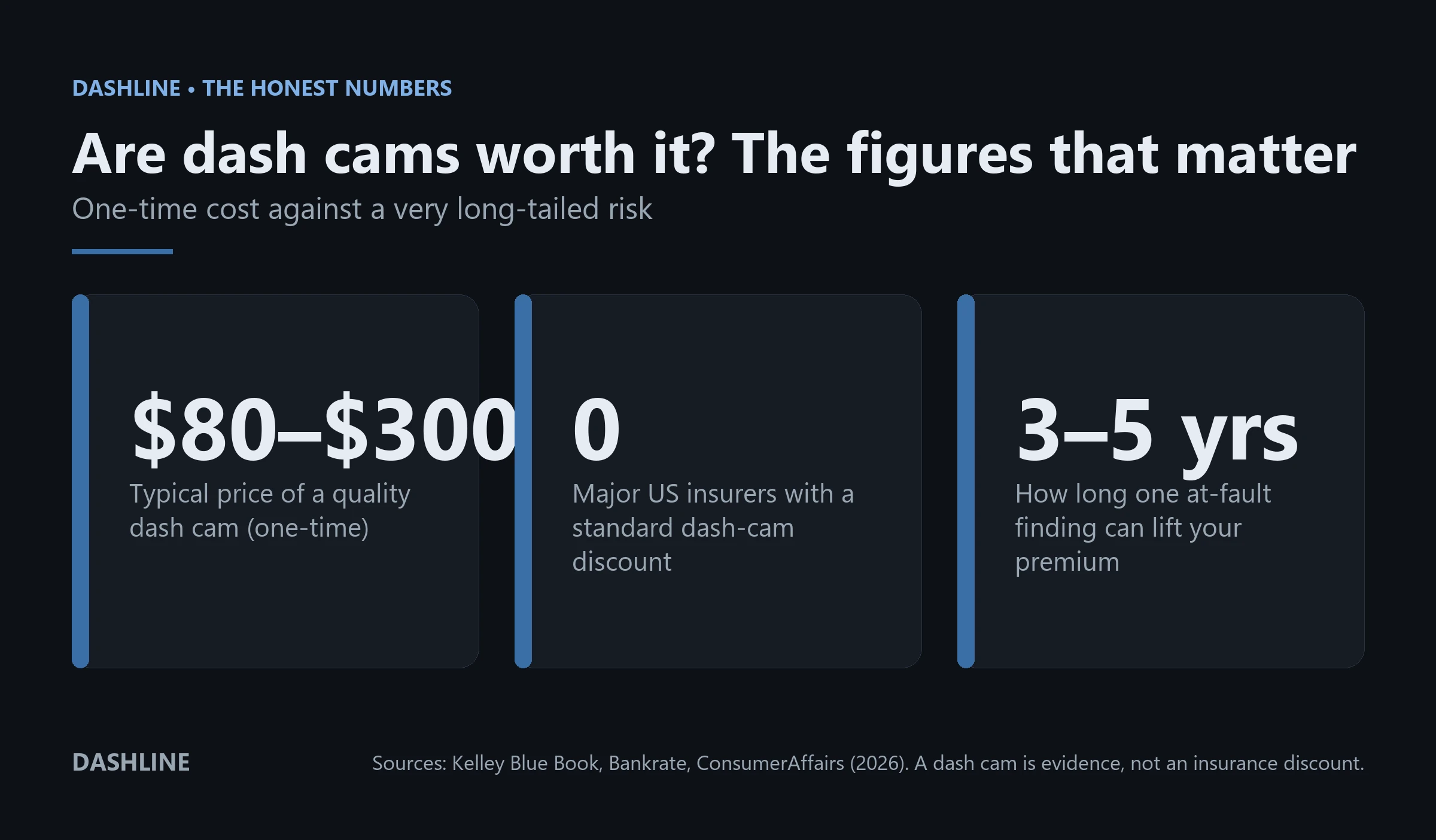
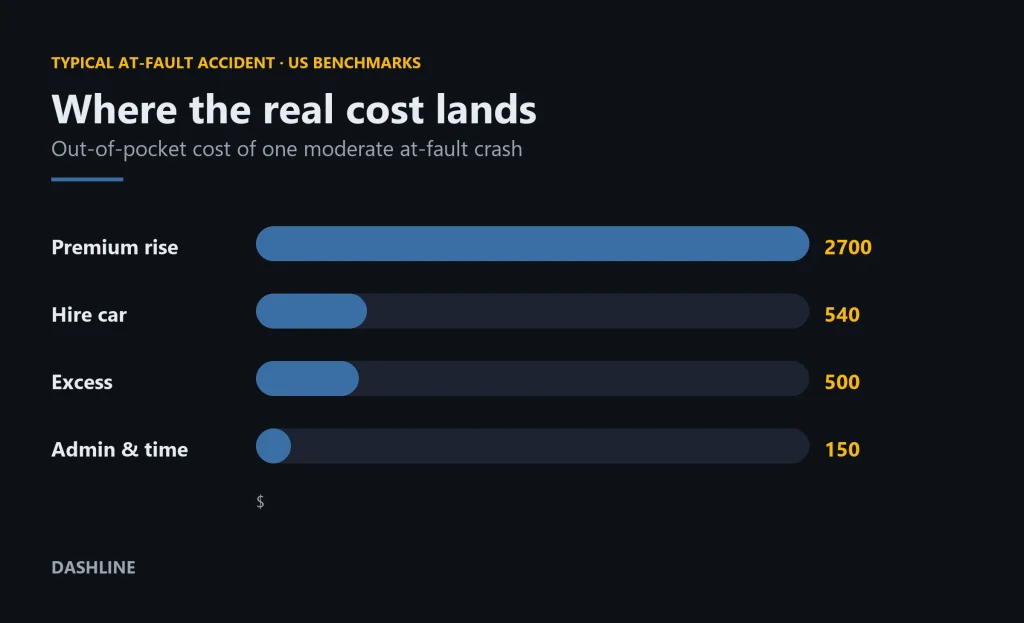
A one-time cost against a long-tailed risk
A dash cam is a small purchase you make once. The thing it protects against — a disputed at-fault claim — can follow you for years. That asymmetry is the whole case.
What it protects you from
Four things worth having on record
Disputed fault
“It was your fault” — when it wasn’t
Most claims come down to two conflicting stories. Footage replaces the argument with a timestamped record of who did what.
Staged fraud
Crash-for-cash scams
Brake-testing and staged rear-ends are a real, organised problem. A clear clip makes the whole scheme fall apart — and protects you from being the target.
Parking knocks
The hit-and-run you never saw
Someone reverses into your parked car and drives off. With parking mode, the impact and often the plate are on record while you’re nowhere near.
Bad actors
Aggressive & uninsured drivers
Tailgating, road rage, a driver with no cover who denies everything — footage gives police and insurers something solid to act on.
How it pays for itself
The day the camera earns its keep
Day 0 · The incident
A driver brake-checks you and you tap them
They stop hard for no reason; you can’t avoid the bump. On the street, this looks like your fault.
Day 1 · The claim
They file, blaming you entirely
Their account is confident and detailed. Without a record, it’s their word against yours — and rear-enders usually fall on the car behind.
Day 3 · The evidence
You send the clip to your insurer
The footage shows the sudden, unprovoked brake. You follow the after-accident steps and hand over the untouched file.
Day 10 · The outcome
Liability reversed, no-claims intact
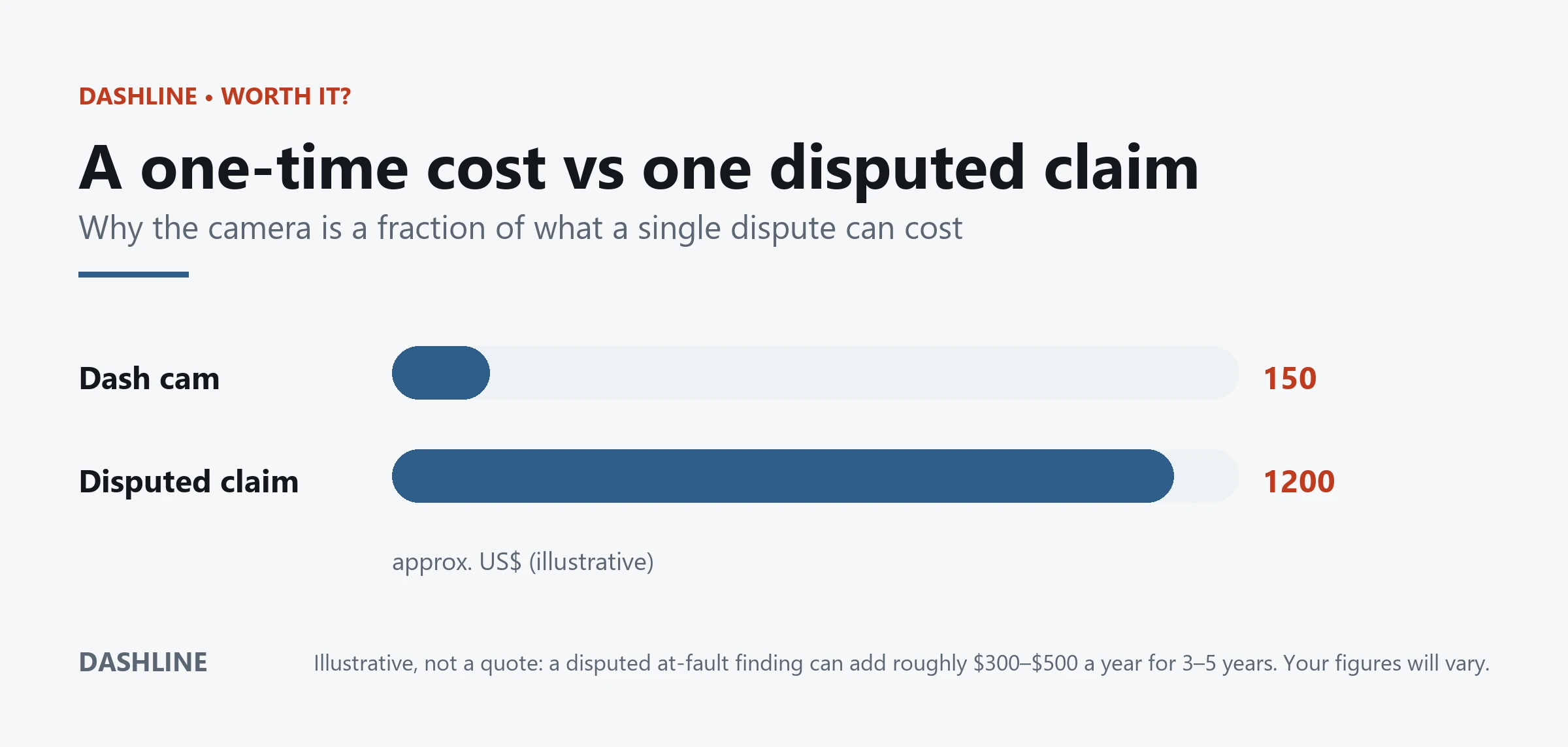
The disputed fault is overturned. Your record — worth hundreds a year for years — stays clean. That single clip just paid for the camera many times over.
The honest cons
Where a dash cam falls short
It won’t cut your premium by itself
As of 2026, no major US insurer gives a standard discount just for owning one. The savings are indirect — through the claims it wins, not a line on your bill.
It records you, too
Your speed, your lane, your own mistakes are all on the footage. If you were at fault, the clip can show it. Honest, but worth knowing.
It records — it doesn’t protect
A dash cam won’t stop a crash or a thief. It gives you evidence afterwards. Powerful, but only after the fact.
Cards wear out; check it now and then
Memory cards have a finite life, and a camera can quietly fail. A 30-second check every few weeks keeps it honest.
The maths, drawn
Small cost, large downside avoided
Is it worth it for you?
Match it to how you drive
The daily commuter
Motorways, traffic, other people’s mistakes, five days a week. Your odds of needing footage are simply higher.
The pro driver
Rideshare, delivery, a company vehicle. Strangers, long hours, and false claims come with the job — and so does the need for proof.
The weekend driver
A garaged car, low miles, quiet roads. Still useful, but the payback is slower — a fair “maybe.”
Still weighing which camera, not whether? Our guide to choosing a dash cam covers what actually matters.
Where Dashline fits
Built to be worth it, honestly
If you decide a dash cam is worth it, here’s the honest pitch for ours — and what it won’t pretend to be.
- True 4K front on a Sony sensor — the detail that makes footage usable as evidence.
- Subscription-free. Footage lives on your own card; no monthly fee, ever.
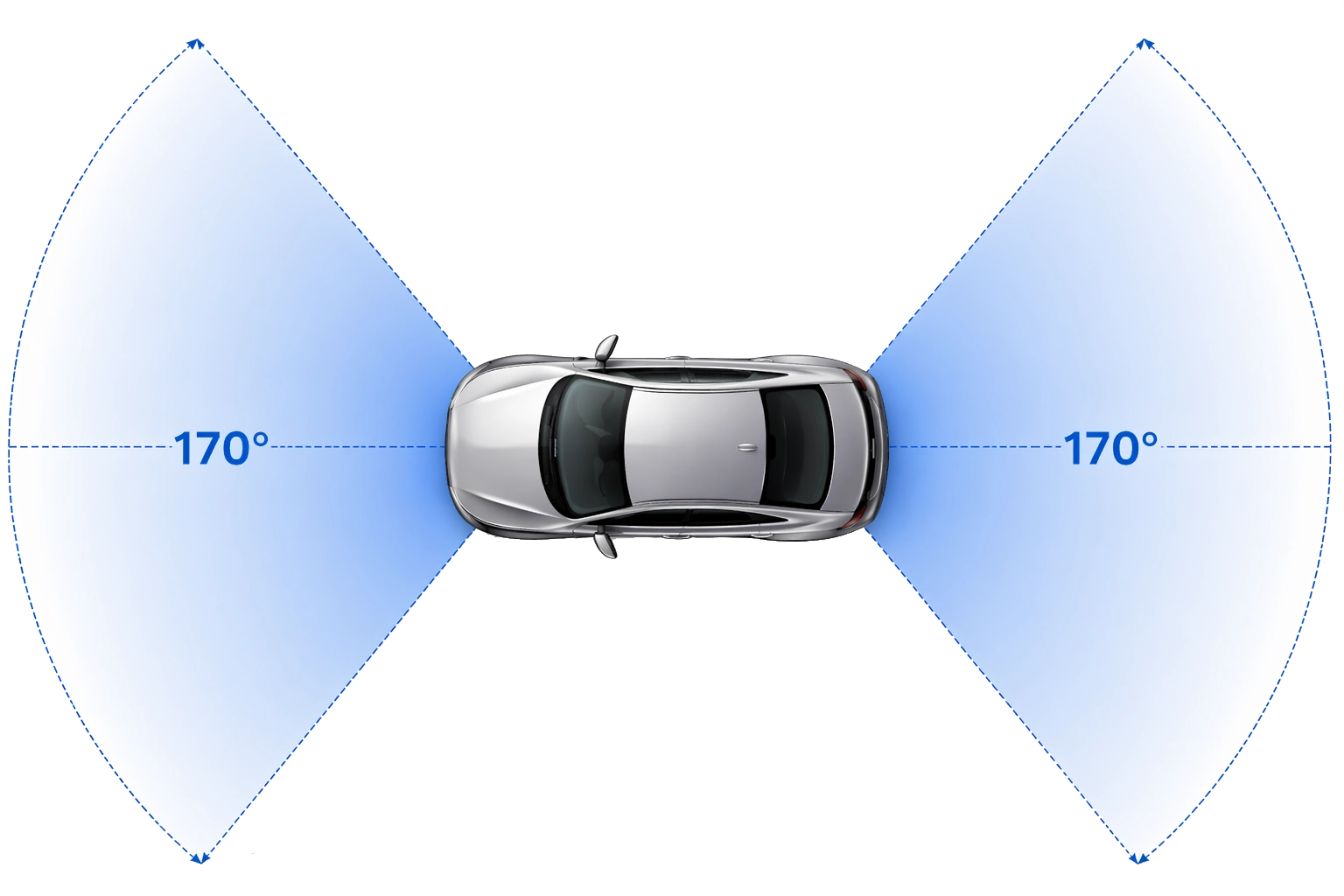
- Wide 170° lens for context — though, honestly, the immediate sides stay blind, as on any dash cam.
- Simple 15-minute setup and an optional rear channel for the road behind.
Three ways to buy
Pick the level that fits your driving
Standard
Front camera only
from €85.95
one-time · incl. memory card
- True 4K front recording
- 170° wide lens
- Loop recording + G-sensor lock
- Subscription-free
Dual Cameras
Front + rear
from €112.95
one-time · incl. memory card
- Everything in Standard
- Rear channel for the road behind
- Covers rear-end & tailgating disputes
- Subscription-free
Full Protection
Front + rear + 24h parking
from €121.55
one-time · hardwire kit for parking mode
- Everything in Dual Cameras
- 24-hour parking mode (hardwired)
- Catches parking knocks & hit-and-runs
- Subscription-free
Subscription-free
No monthly fees, ever
Your own card
Footage stays with you
True 4K Sony
Detail that holds up
15-min install
Plug in and go
Questions
Are dash cams worth it? Answered
Are dash cams worth it?
Do dash cams actually lower your car insurance?
What is the downside of a dash cam?
Is a dash cam worth it if I rarely drive?
How much does a good dash cam cost?
Can dash cam footage be used against me?
Decided it’s worth it?
Get the honest one: true 4K, subscription-free, footage on your own card — and upfront about what a dash cam can and can’t do. Weighing the specs next? See whether a 4K dash cam is worth it over 1080p.
View the Dashline 4K Free 15-minute setup · no monthly fees · 30-day returns
Leave a Reply