
Discreet by design
What to look for in a hidden dash cam
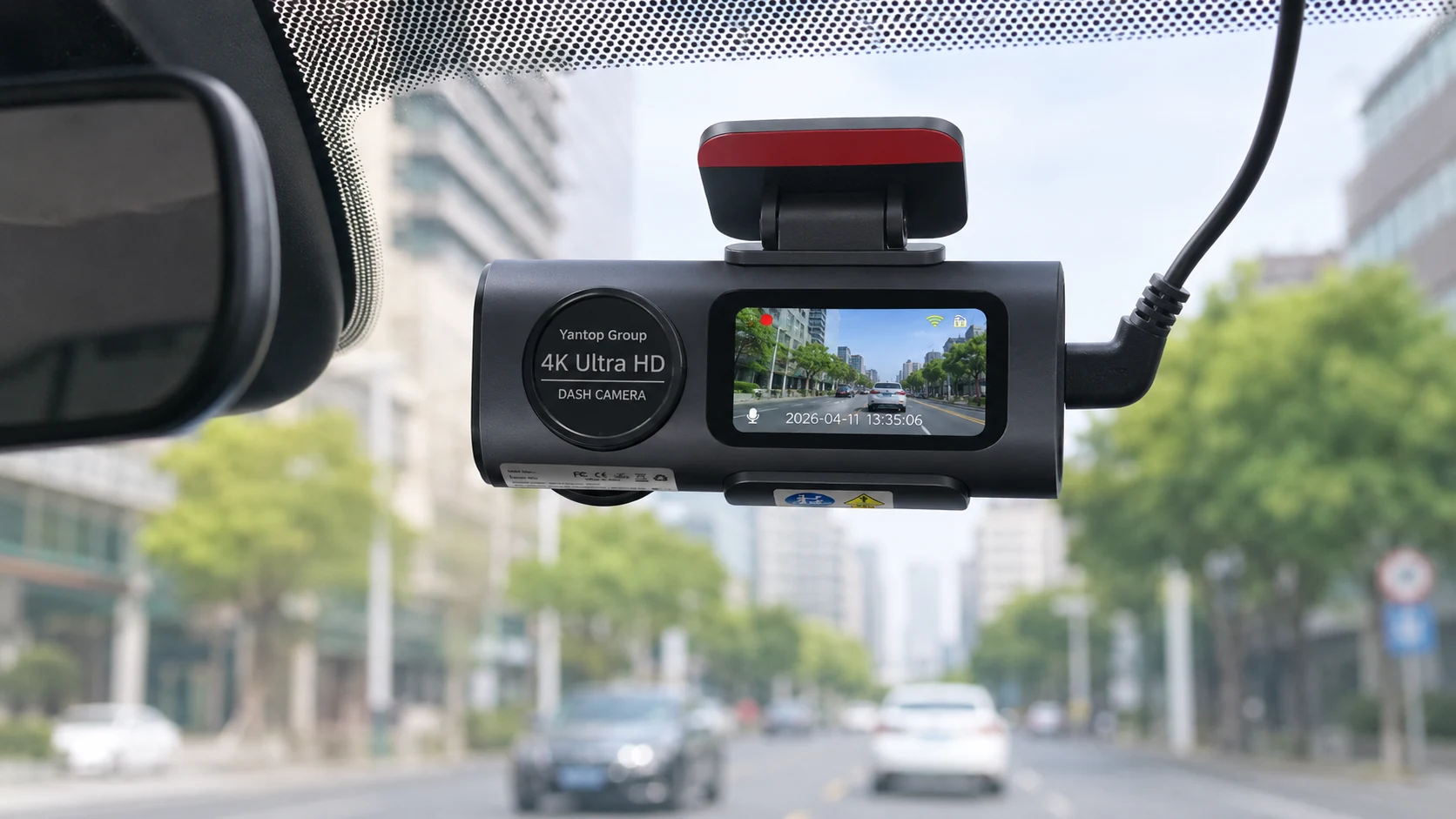
A truly “hidden” camera isn’t a spy gadget — it’s a compact cam mounted behind the mirror and wired out of sight. Here are the features that keep it discreet and useful.
Why go discreet
A camera nobody notices does more
A visible camera is a target — quick to spot, unplug or steal, and an awkward talking point with passengers. A discreet one keeps the cabin clean, stays powered, and records without drawing attention.
The goal isn’t invisibility — a windscreen cam still sits on the glass. It’s small size, a tidy behind-the-mirror mount, and hidden wiring so it reads as part of the car. New here? Start with our wider guide to choosing a dash cam.
The 30-second checklist
For a hidden dash cam, prioritise, in order:
- 1A small body, and a screen you can dim or switch off.
- 2A behind-mirror mount with a hardwire kit, so the cabling hides.
- 3True 4K front video and a strong low-light sensor.
- 4A sensible 140–170° viewing angle.
- 5Parking mode, GPS and a Wi-Fi app.
- 6A capacitor (not a battery) for heat, plus reliable loop & event storage.
The feature checklist
Every feature that matters, by group
Tap a group to see what to look for — and where Dashline honestly lands.
Discreet / OEM-style install
Look for: a body that mounts flush behind the mirror, plus a hardwire kit so power runs through the fuse box and down the trim — no dangling cable to the 12V socket.
Dashline: tucks behind the mirror; the Full Protection kit hardwires it for a clean, OEM-style finish.
Size & screen
Look for: the smallest body you can live with, and a screen that dims or turns off so there’s no glow at night or giveaway by day.
Dashline: compact, with a small screen you can dim or switch off once it’s set up — discreet, though not fully screenless.
Video resolution
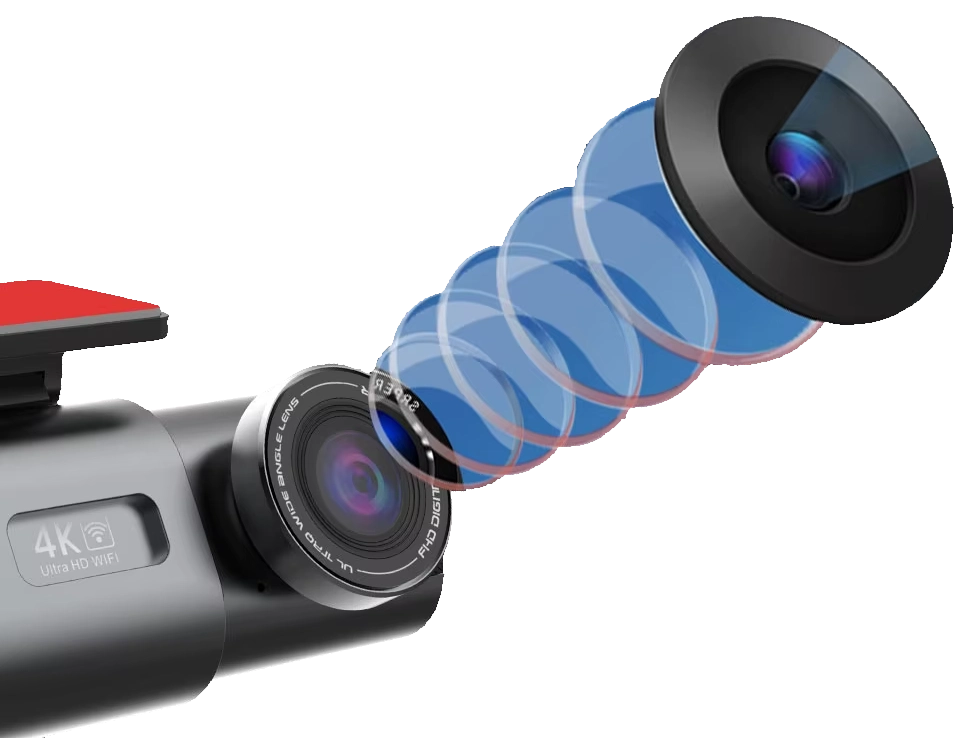
Look for: true 4K on the front channel — enough detail to read plates and faces in good light, not interpolated “4K”.
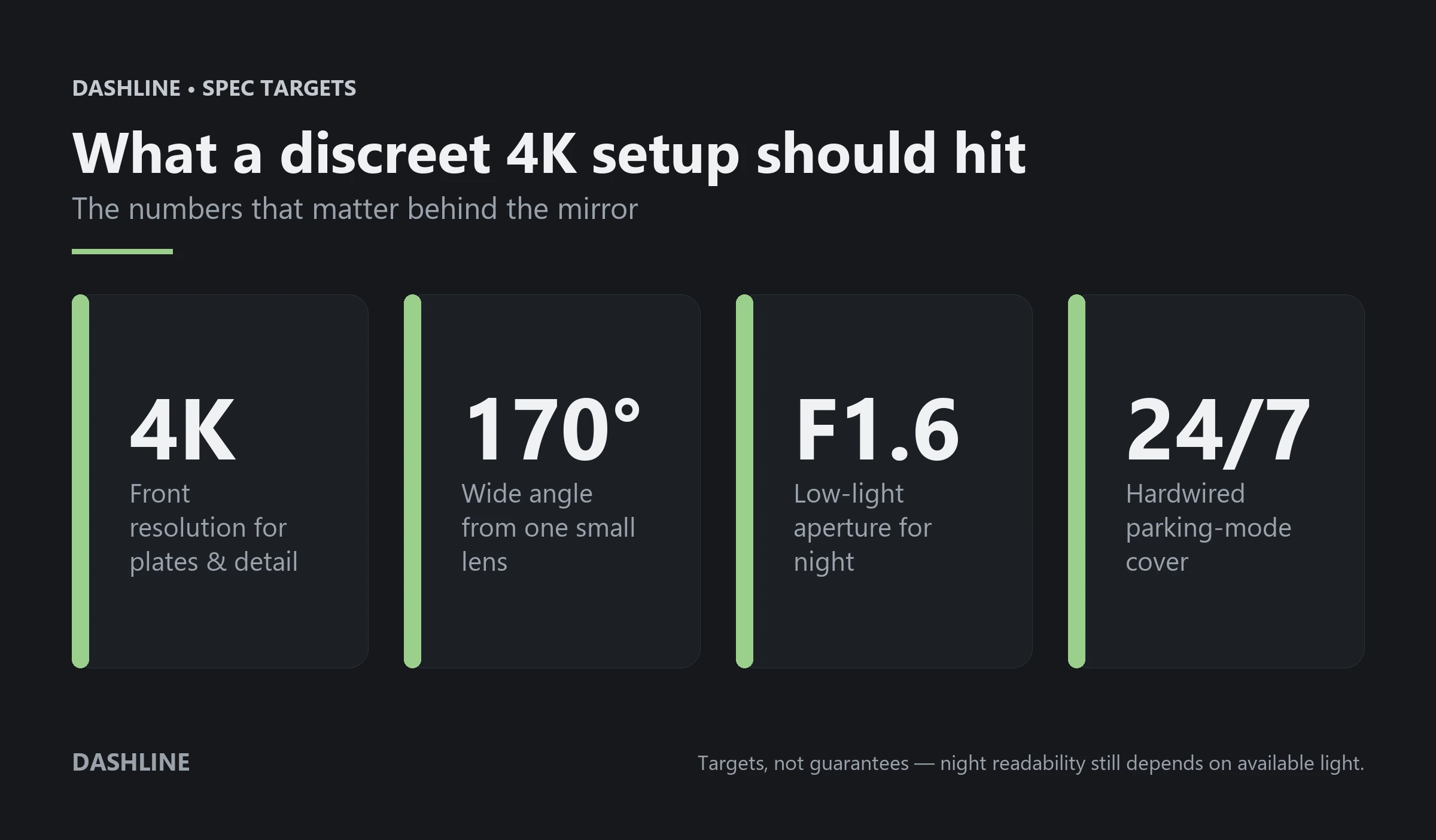
Dashline: native 4K front (Sony sensor), not upscaled.
Night vision
Look for: a large aperture (around F1.6) and a proven low-light sensor; night is physics, so treat any night claim with healthy scepticism. See our night-driving guide.
Dashline: F1.6 aperture tuned for low light — strong, within the honest limits of night.
Viewing angle
Look for: roughly 140–170°. Wider sees more but stretches detail at the edges; the sweet spot balances coverage and clarity.
Dashline: 170° wide, framed to keep the centre usable.
Parking mode
Look for: motion/impact recording while parked — but only if it has continuous power. That means a hardwire kit with a voltage cut-off, not the 12V socket.
Dashline: offers 24-hour parking mode with the hardwire kit; a cut-off protects your starter battery.
Reliability & heat resistance
Look for: a supercapacitor rather than a lithium battery — capacitors shrug off summer heat far better inside a parked car.
Dashline: built for continuous use; hardwired parking avoids relying on an internal battery in the heat.
Storage & loop recording
Look for: support for a large microSD (128GB+), loop recording, and a protected folder so impact clips aren’t overwritten.
Dashline: loop recording with protected event files; use a high-endurance card.
Wi-Fi & mobile app
Look for: local Wi-Fi to pull clips to your phone without pulling the card — handy when the cam is tucked out of reach.
Dashline: built-in Wi-Fi with a phone app for review and settings.
GPS
Look for: embedded GPS stamps speed and location into the footage — useful evidence, without broadcasting your live position.
Dashline: GPS logs speed and location into each clip (recorded, not transmitted).
Front-only vs front & rear
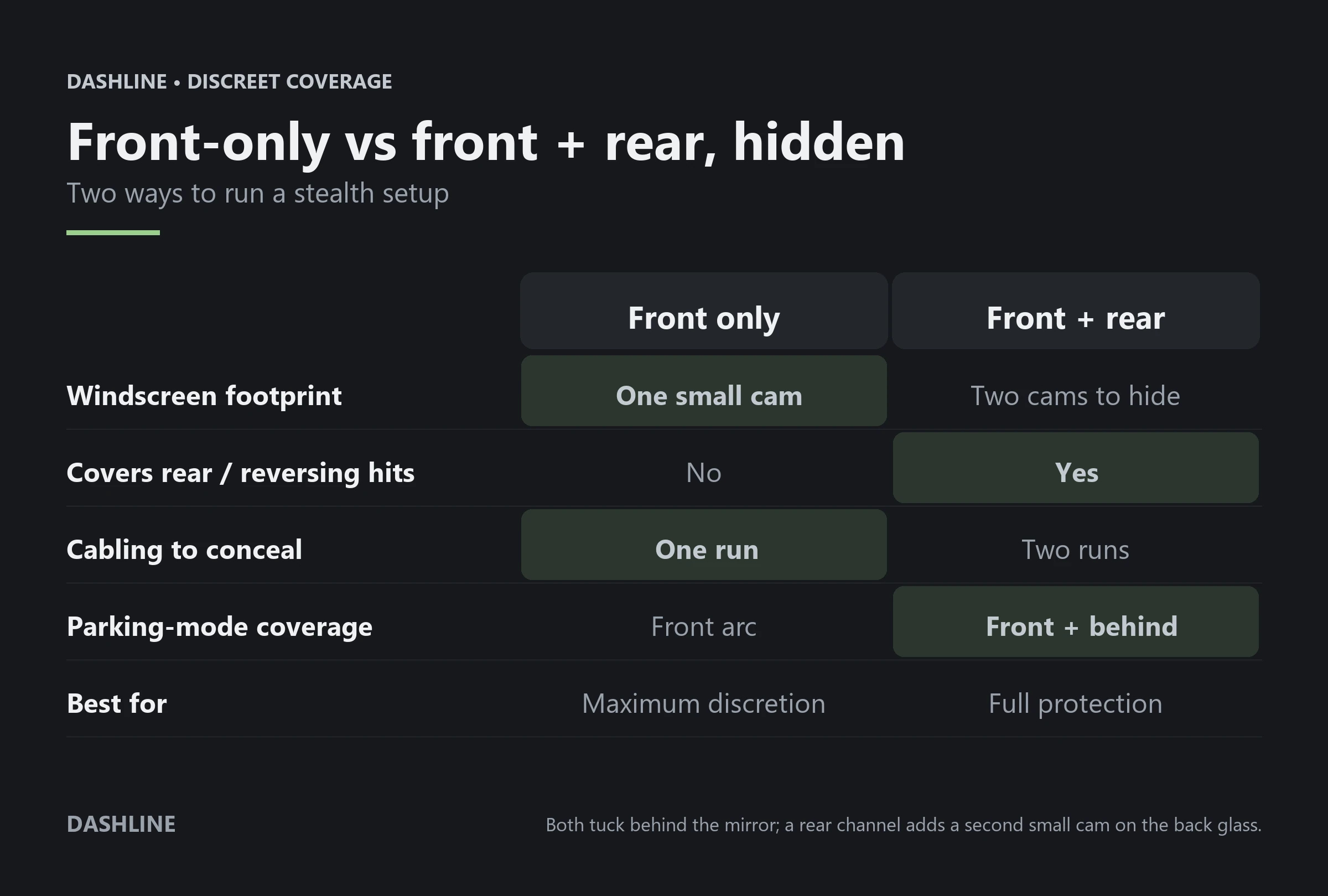
Look for: decide up front: one cam is the most discreet; adding a rear channel covers reversing and following traffic. More below and in our front & rear guide.
Dashline: available front-only or front + rear, so you can match discretion to coverage.
Coverage vs discretion
Front-only or front & rear?
One cam is the stealthiest choice; a rear channel covers what a front lens never will.
Install it so nobody sees it
The discreet setup, step by step
Mount high, behind the mirror
Place the body tight to the rear-view mirror mount. From the driver’s seat it hides behind the mirror; from outside it reads as part of the car.
Hardwire, don’t dangle
Power it from the fuse box with a hardwire kit instead of the 12V socket — that’s what enables parking mode and removes the tell-tale cable.
Tuck the cabling
Run the wire along the headliner and down the A-pillar trim. A few minutes of routing is the difference between “gadget” and “factory”.
Dim the screen, set parking mode
Turn the display off or on a timer, enable impact/parking recording, and confirm the card is formatted.
Not comfortable near the fuse box? A plug-in mount still hides well; you just won’t get parking mode. For anything permanent, an installer is worth it.
Kept honest
What “hidden” can’t change
It still lives on the glass
A windscreen cam is discreet, not invisible. “Hidden” means small, high and tidily wired — not a camera no one could ever find.
Screenless isn’t always better
No screen is stealthier, but you lose quick on-device checks. A dimmable screen is often the better real-world trade.
Parking mode needs power
Without a hardwire kit and a voltage cut-off, most cams switch off with the ignition and record nothing while parked.
Night has limits
A small lens gathers limited light. Plate readability depends on speed, distance and lighting — no camera guarantees it in the dark.
Hold it to these
The numbers worth insisting on
A compact cam can still hit the specs that matter — here’s the bar.
Match it to you
Which discreet setup fits?
Front-only
One small cam, one cable to hide. The cleanest cabin and the simplest install — ideal if discretion beats full coverage.
Front + rear
Adds a discreet second cam on the back glass for reversing and following traffic — the balanced choice for most drivers.
Front + rear + 24H
Hardwired parking protection front and back, for car parks and street parking where hits happen while you’re away.
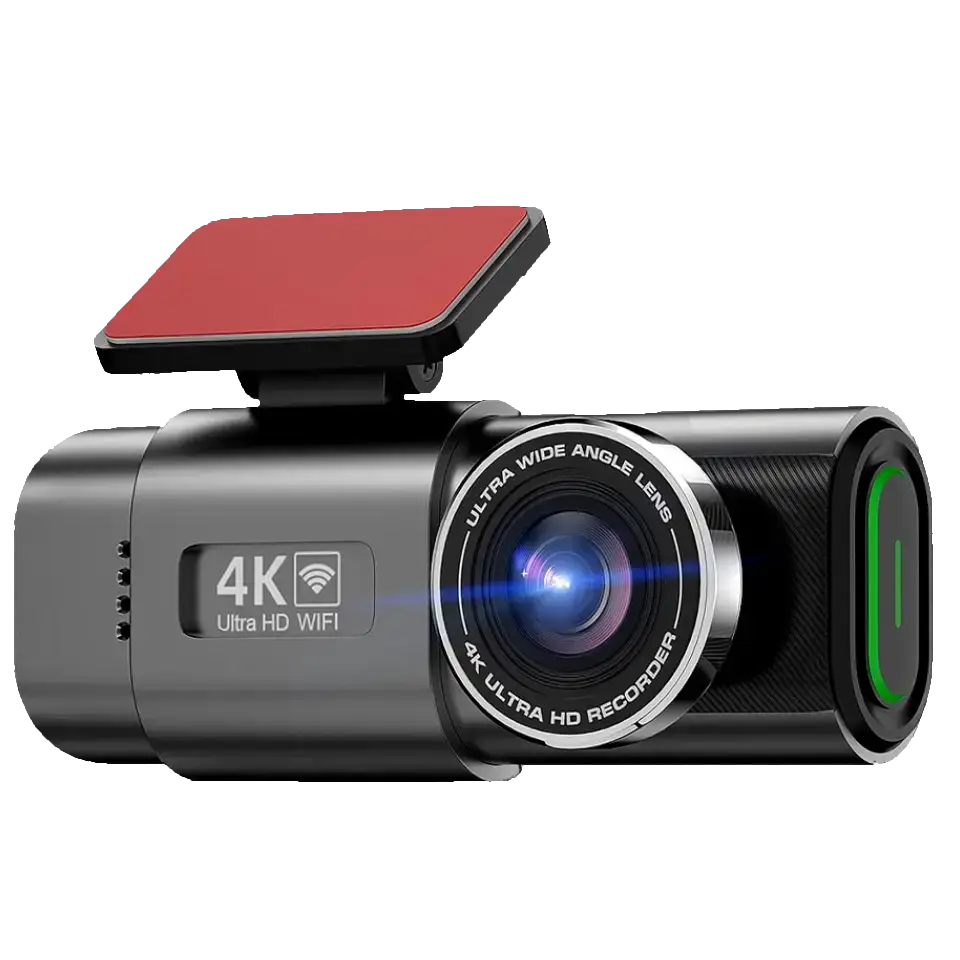
Choose your cover
Three ways to run it discreetly
Start front-only for the stealthiest setup; add the rear channel and the 24-hour hardwire kit when you want full, parked-and-moving cover.
Choose your setup
One camera. Three levels of protection.
From everyday recording to full 24/7 surveillance — pick the package that matches how you drive.
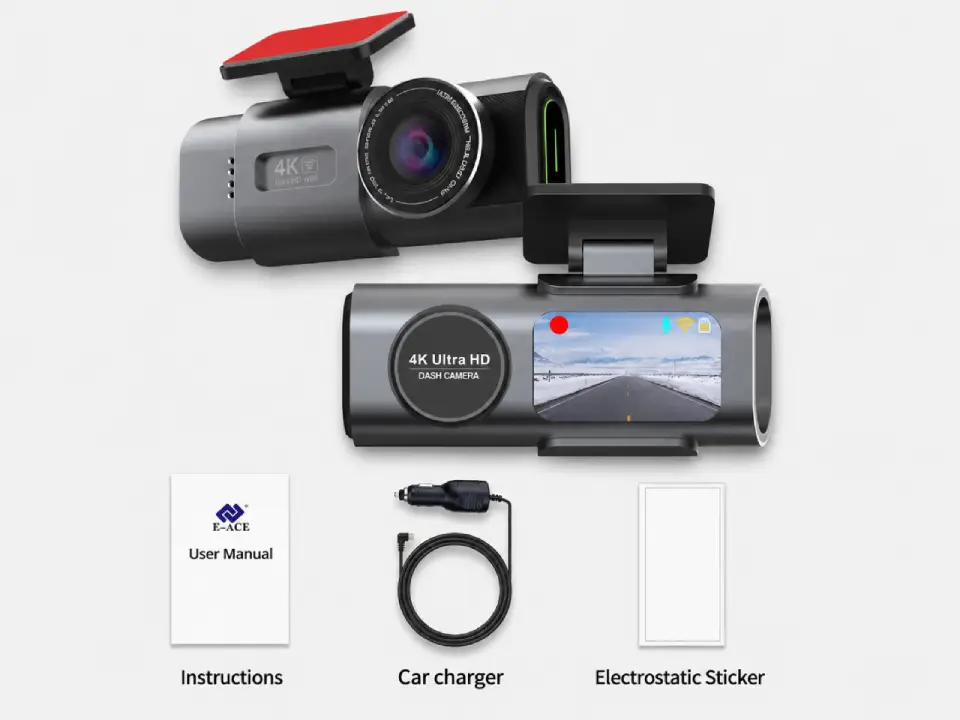
Standard
Package contents
- Front camera
- Car connection cable
- Magnetic sticker
Most popular
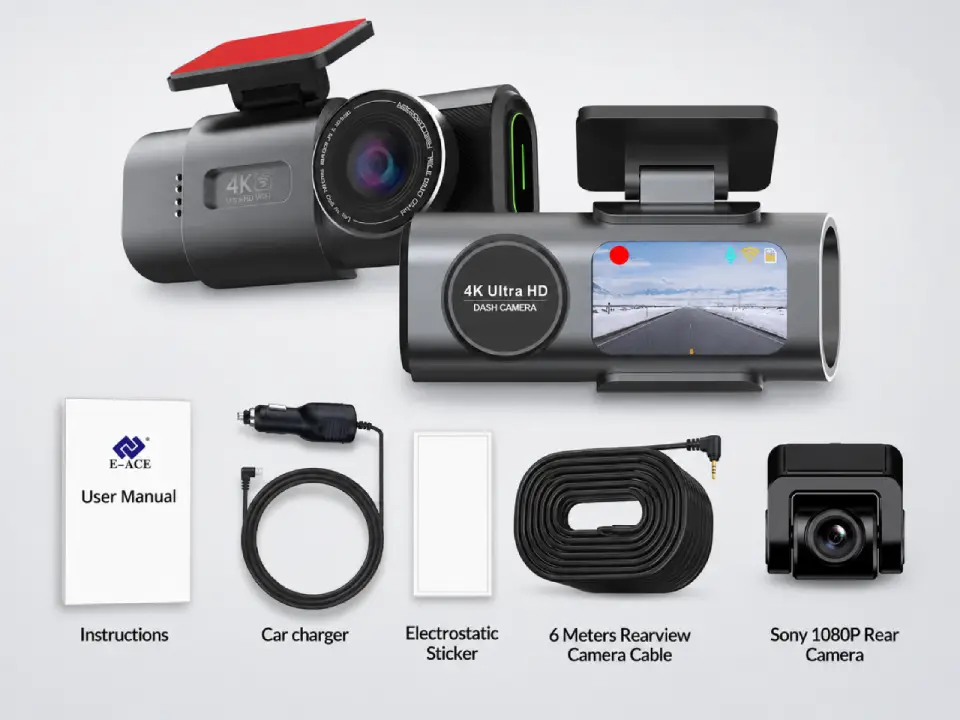
Dual Cameras
Package contents
- Everything in Standard
- Sony rear camera
- 6-meter connection cable
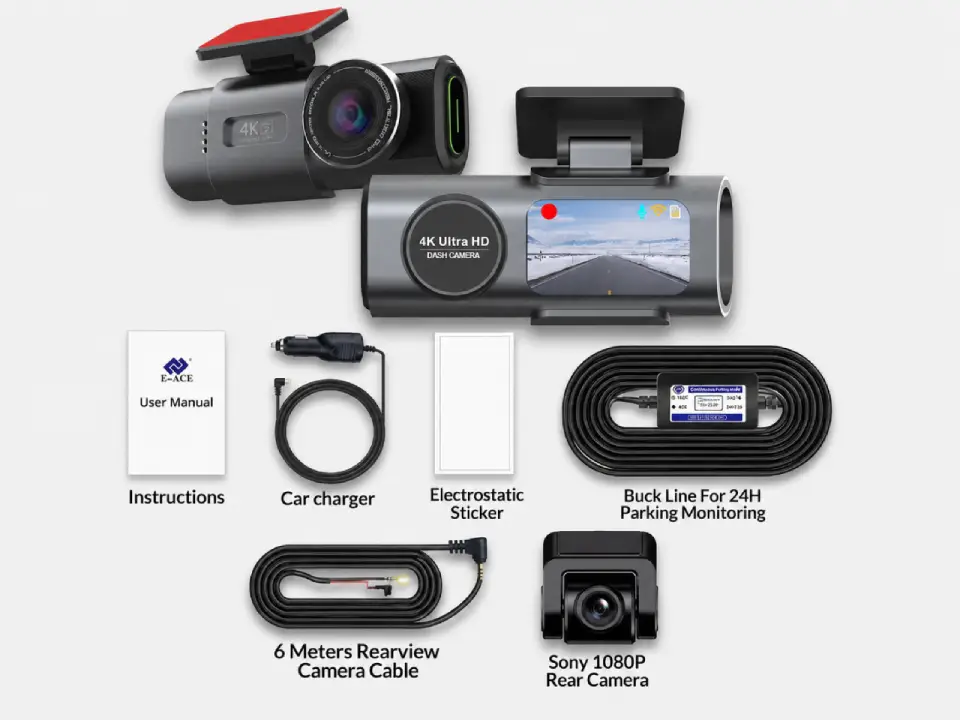
Full Protection
Package contents
- Everything in Dual Cameras
- 24h-compatible battery
- Live view from parked car
Free Shipping
5–10 days across Europe
Secure Payment
Apple Pay · PayPal · Stripe
2-Year Warranty
Full hardware coverage
30-Day Return
No questions asked
Common questions
Hidden dash cams, answered
What makes a dash cam “hidden” or discreet?
Small size, a mount tucked tight behind the rear-view mirror, and hidden wiring (hardwired through the fuse box). A screen you can dim or switch off helps too. It’s about being unnoticed, not literally invisible.
Do I need a screenless dash cam to be discreet?
No. Screenless models are the stealthiest, but you lose quick on-device playback. A compact cam with a dimmable screen, mounted high and hardwired, is discreet enough for most people and easier to live with.
Can a hidden dash cam still record in 4K and at night?
Yes. A small body can house a native 4K sensor and a wide (around F1.6) aperture. Night performance comes from the sensor and lens, not the size — though low light always limits detail.
Does a discreet dash cam have parking mode?
Only if it has continuous power. That means a hardwire kit with a voltage cut-off, not the 12V socket. Without it, the camera switches off with the ignition and won’t record while parked.
How do I hide the wiring?
Run the cable up into the headliner, across and down the A-pillar trim to a hardwire kit at the fuse box. It takes a few minutes and removes the dangling cable that gives a camera away.
Is a front-only or front and rear setup better for hiding?
Front-only is the most discreet — one small cam, one cable. Front and rear covers reversing and following traffic but means a second cam and a second wiring run. Match it to how much coverage you need.
Will heat damage a hidden dash cam in summer?
Choose a model with a supercapacitor rather than a lithium battery — capacitors tolerate the heat of a parked car far better. Hardwired parking also avoids relying on an internal battery.
Does the Dashline dash cam count as a hidden dash cam?
It’s a compact behind-the-mirror 4K cam that installs discreetly and hardwires for a clean, OEM-style finish. It does have a small (dimmable) screen, so it’s discreet by install rather than fully screenless.
Discreet, done right
A camera that protects without being seen
Native 4K, F1.6, 170°, GPS and Wi-Fi in a compact body — hardwire-ready for a clean, hidden install. Subscription-free, footage on your own card.
Leave a Reply