
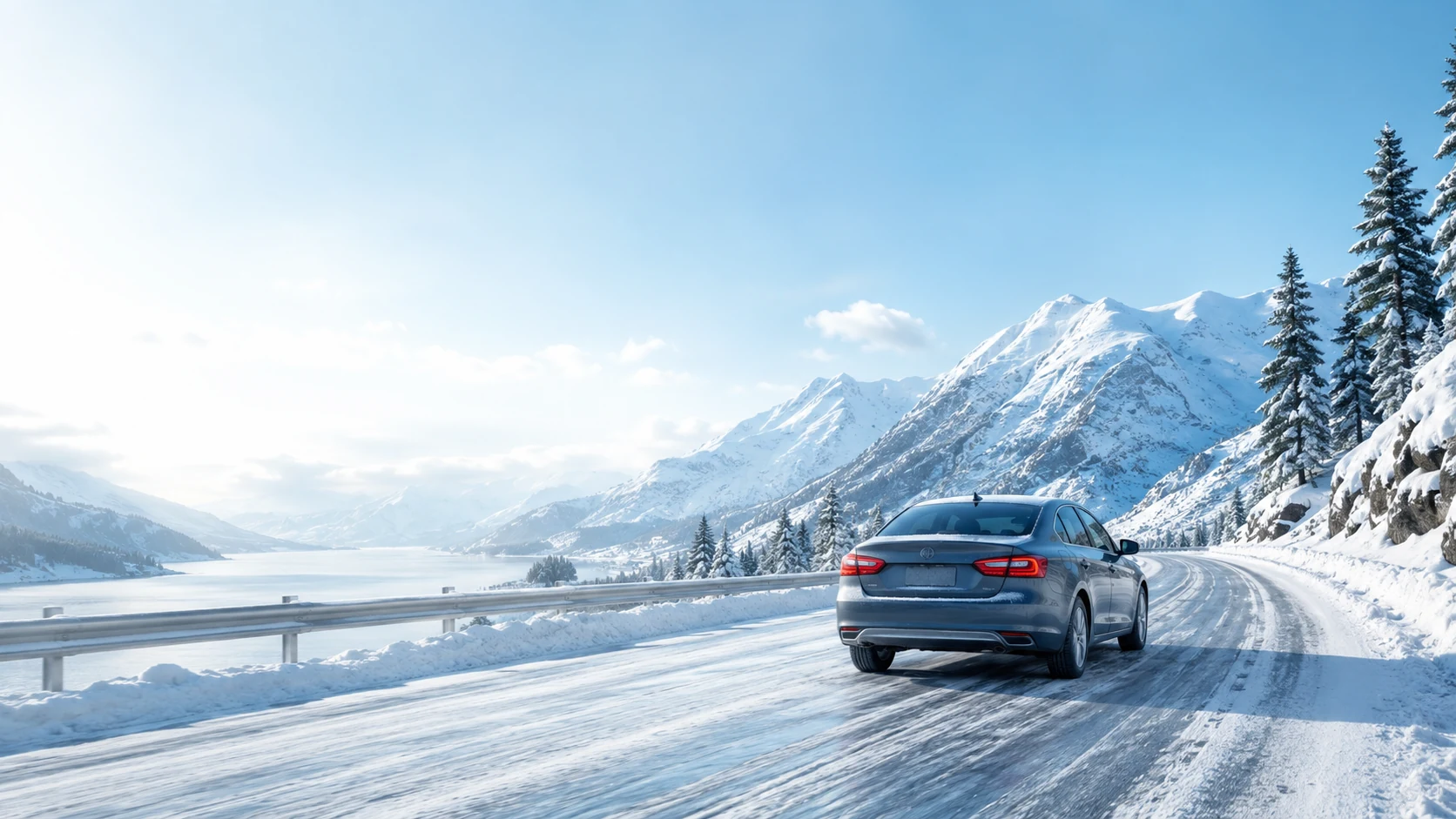
Best dash cam for winter driving
Your dash cam, ready for winter.
Snow, glare and short days hide what happens on the road. Here is how to keep clear, time-stamped evidence all winter — and what no camera can promise.
The winter problem
Winter hides the evidence.
Most footage you see online is shot on a bright, dry day. Real winter driving is darker, brighter and messier — all at once. The camera still records; the question is whether the clip is usable when you need it.
Snow on the lens
A capped or slushed lens records a white blur — no plate, no fault.
Low-sun glare
A winter sun at windscreen height can wash a number plate to nothing.
Cold, dark parking
A flat 12 V battery or a frozen card means the camera never wakes.
The 30-second answer
Yes — if you set it up for the cold.
A dash cam is genuinely useful in winter: it captures black-ice skids, spray, and the driver who blames you for both. The catch is the cold. Plan for battery loss, a clear lens and glare, and you get reliable, time-stamped footage. Ignore them and the camera may not even be recording when it matters.
Pick your condition
Three winters, one camera.
Lens
Snow and salt spray can cap the lens — the clip goes white.
Footage
WDR holds detail in flat, bright snow light.
Do this
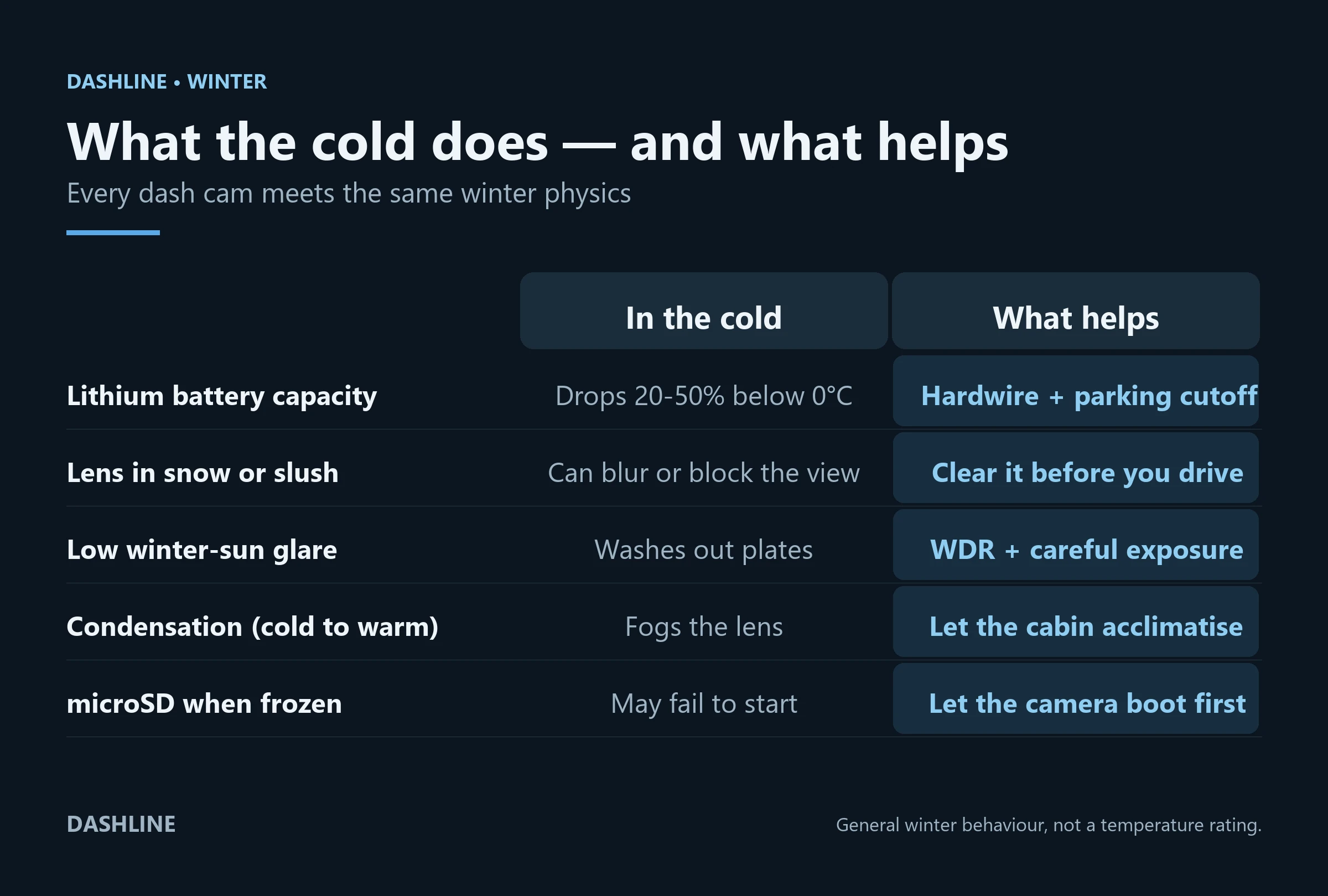
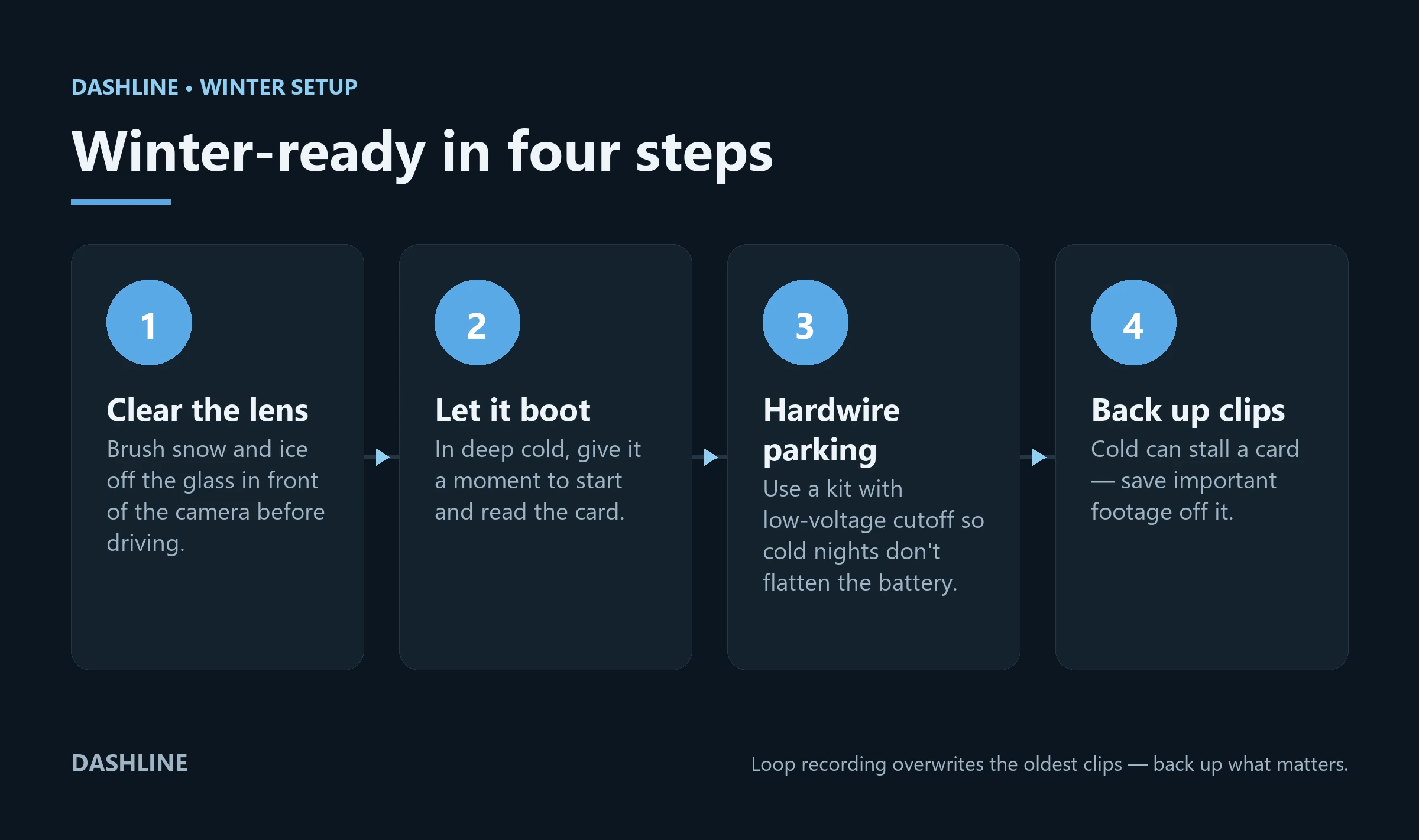
Wipe the glass in front of the camera before each drive.
Glare
A low sun at screen height blows out plates and signs.
Footage
Good exposure + WDR recover more of the frame.
Do this
Keep the windscreen clean; a CPL filter cuts glare.
Battery
Cold cuts 12 V capacity 20–50%; idle recording drains it.
Power
A hardwire kit with low-voltage cutoff protects the car battery.
Do this
Use parking mode and check clips after cold nights.
What to look for
Five things that actually matter in winter.
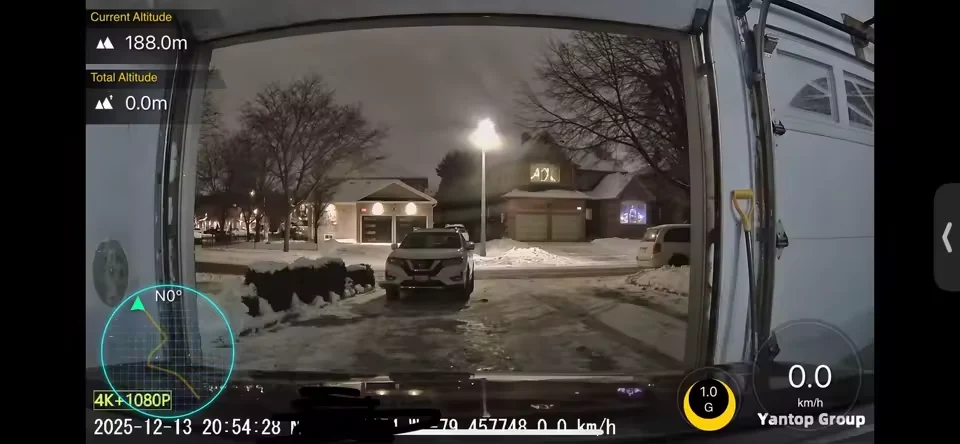
How a winter clip settles it
From a skid to a settled claim.
Black ice
Your car slides at a junction — no one is sure who had right of way.
The dispute
The other driver insists you ran the give-way. It is your word against theirs.
The clip
Your dash cam has the moment, time-stamped, with GPS speed and location.
Resolved
The insurer and police see what actually happened — not who argues hardest.
Where Dashline fits
Built to keep recording.
Dashline is one honest 4K camera, not a catalogue. For winter that is the point: true 4K with WDR for glare, local storage that no cold night can interrupt, and a hardwire-ready parking mode for freezing car parks.
- Native 4K front sensor with WDR for snow glare and low sun
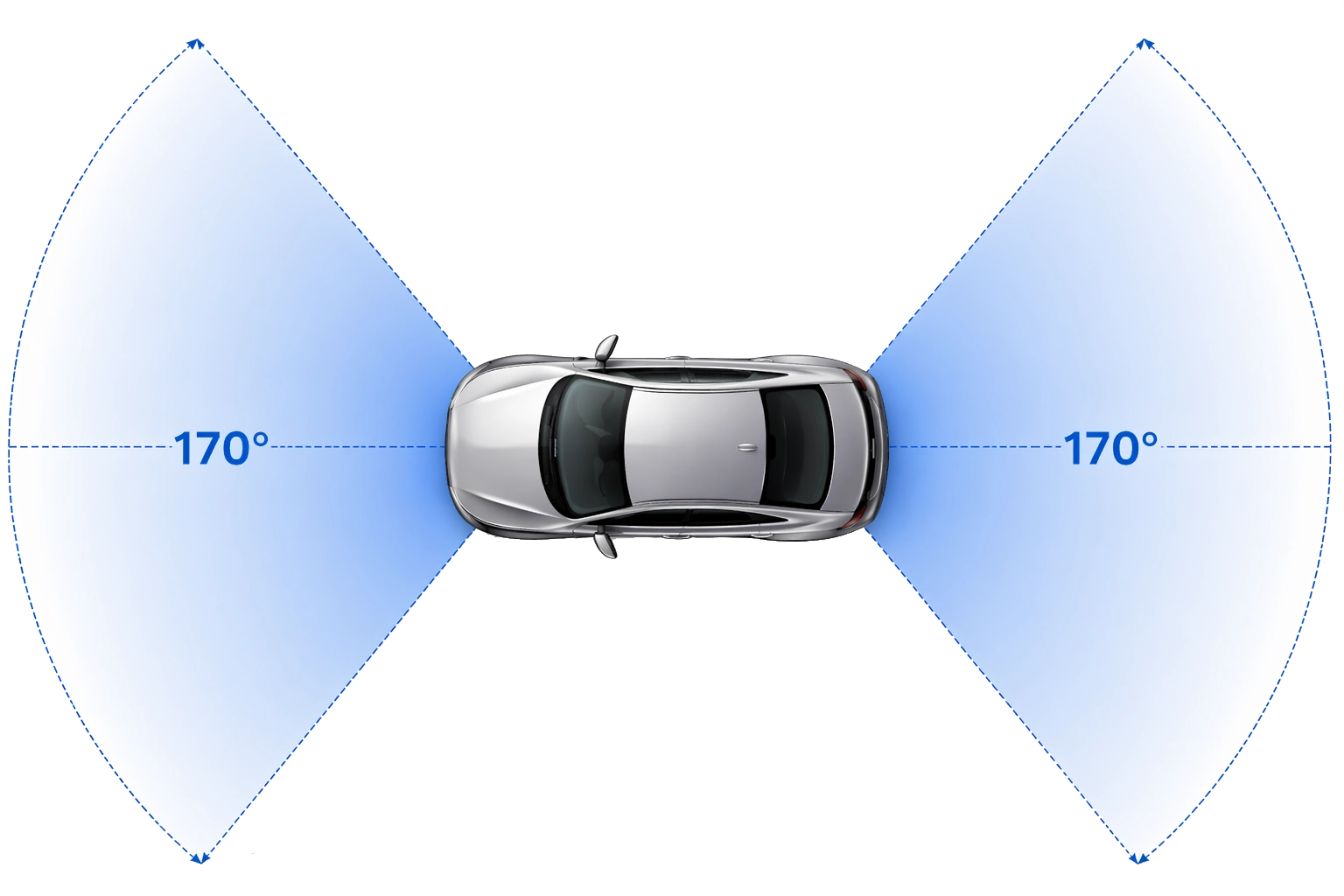
- 170° view and a front + rear option for spray and rear-enders
- Records to local microSD — no subscription, no cloud to drop
- Built-in screen and GPS so every clip is time- and place-stamped
Winter field notes
Two winter details most owners miss.
A dash cam is only as reliable as the pad holding it up — and that is exactly what winter attacks first. Adhesive and electrostatic mounts lose grip on cold, damp glass, and a camera that slides behind the dashboard on the first hard frost records nothing at all. Fit it when the windscreen is warm and clean, ideally indoors or after the demister has run, press it firmly for a full minute, then give the adhesive a day to cure before the car sits out overnight in deep cold. A two-minute re-stick in November is far cheaper than a mount that lets go in January.
The first minutes of a winter drive are also the blurriest. A frosted or fogged windscreen sits between the lens and the road until the demister clears it, so footage straight after a cold start can look soft — worth knowing if something happens at the end of your road rather than on the motorway. Outside the car it is grime that wins: road salt and slush coat a rear or number-plate camera far faster than the front, quietly turning the channel you cannot see into a grey smear. A quick wipe of the rear lens whenever you clear the car keeps that footage actually usable.
The honest part
What winter still wins.
Cold is cold
Like any electronics, very low temperatures can slow start-up. Give it a moment to boot and read the card.
A blocked lens sees nothing
Snow, salt or ice over the lens beats every camera. Clear the glass before you drive.
Night still trades detail
Dark, unlit winter roads lose far detail. Plate readability stays conditional on speed, distance and light.
It is evidence, not prevention
A dash cam proves what happened; it cannot stop a skid. Drive to the conditions first.
Choose your cover
Pick the winter setup that fits.
Every package records true 4K to a microSD card you own — no subscription. Add a rear camera for spray and rear-enders, or 24-hour parking for cold overnight cover.
Choose your setup
One camera. Three levels of protection.
From everyday recording to full 24/7 surveillance — pick the package that matches how you drive.
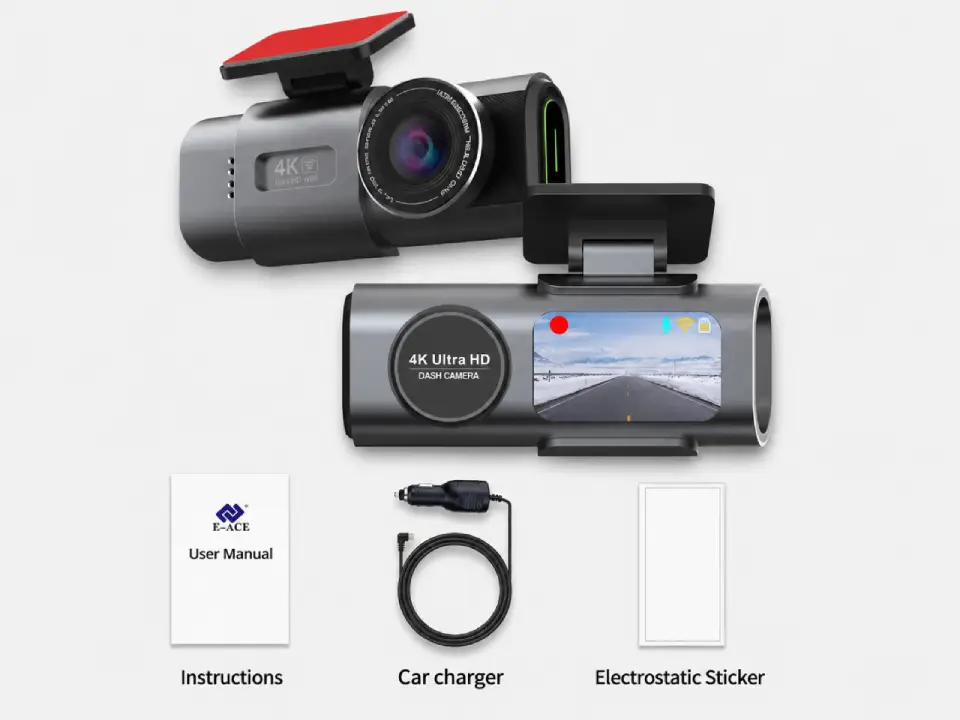
Standard
Package contents
- Front camera
- Car connection cable
- Magnetic sticker
Most popular
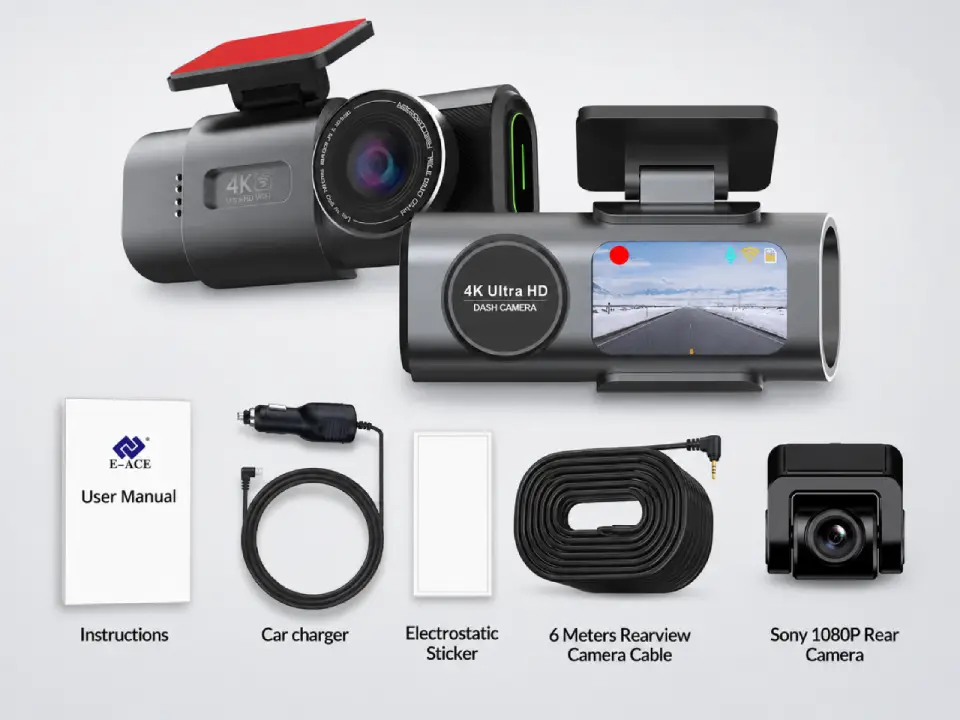
Dual Cameras
Package contents
- Everything in Standard
- Sony rear camera
- 6-meter connection cable
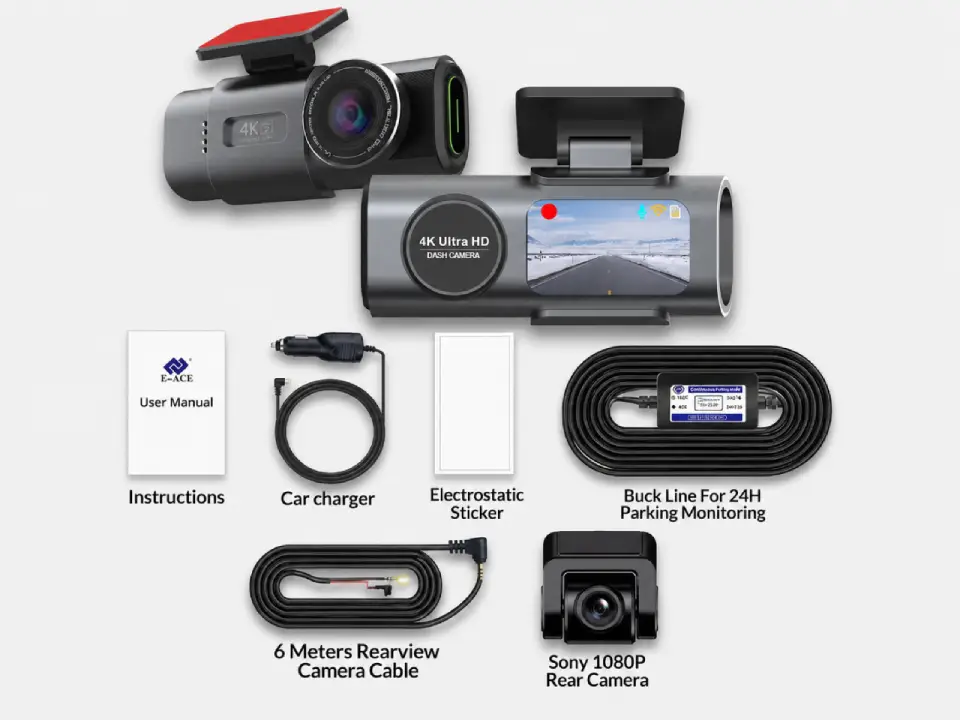
Full Protection
Package contents
- Everything in Dual Cameras
- 24h-compatible battery
- Live view from parked car
Free Shipping
5–10 days across Europe
Secure Payment
Apple Pay · PayPal · Stripe
2-Year Warranty
Full hardware coverage
30-Day Return
No questions asked
Winter questions
Dash cams in winter, answered.
Do dash cams work in freezing temperatures?
Most do, within a rated range — but cold lithium batteries lose 20–50% of capacity below 0°C and LCD screens can be sluggish. Give the camera a moment to start and read the card on very cold mornings.
Will snow or ice stop it recording?
The camera keeps recording, but if snow, salt or ice covers the lens the footage is a white blur. Clear the glass in front of the camera before every drive.
Can a dash cam handle low winter sun glare?
A low sun at windscreen height is hard for any camera. WDR and good exposure recover much of the frame, and a clean windscreen (or a CPL filter) cuts glare on the glass.
Does parking mode drain my battery in winter?
It can. Cold already weakens the 12 V battery, and idle recording adds to it. Use a hardwire kit with a low-voltage cutoff, or a time-lapse parking mode, so the camera never flattens the car.
Why does condensation form on the camera?
Moving from freezing air to a warm cabin can fog the lens and, over time, reach the electronics. Let the cabin temperature settle rather than blasting heat straight at a frozen camera.
Is 4K worth it for winter driving?
Yes for daytime glare and detail, where dynamic range and resolution help read plates and signs. At night the sensor and light matter more than the pixel count — 4K is not a night-vision shortcut.
Do I need front and rear for winter?
Rear is worth it if you want spray, tailgating and winter rear-enders on record. The front camera covers the road ahead; the rear adds the half of winter driving you cannot see.
Will the footage hold up for an insurance claim?
Time-stamped, GPS-tagged footage is widely accepted and often decisive in a winter dispute. Keep the original clip, back it up off the card, and share it with your insurer or the police rather than posting it online.
WHAT THE COLD DOES
How freezing weather actually affects a dash cam
Winter is where cheap cameras quietly fail. Four cold-weather effects are worth planning around:
- Battery capacity drops. A battery-based camera can lose 20–30% of its run time below freezing, so parking-mode hours fall short of the spec. A supercapacitor model, or a hardwire kit drawing from the car, sidesteps most of it.
- Condensation is the real enemy. A fast warm-up fogs the lens. Leave the camera in the car overnight rather than carrying it indoors, and run the demister at the glass early.
- Mounts let go. Suction cups fail in extreme cold; an adhesive mount holds far better through freeze-thaw.
- Give it a moment. On a frozen morning the first minute of footage can be soft until the windscreen clears.
Cold bites hardest on an unattended car, so it’s worth seeing what parking mode records and sizing the battery honestly with the parking-mode battery calculator.
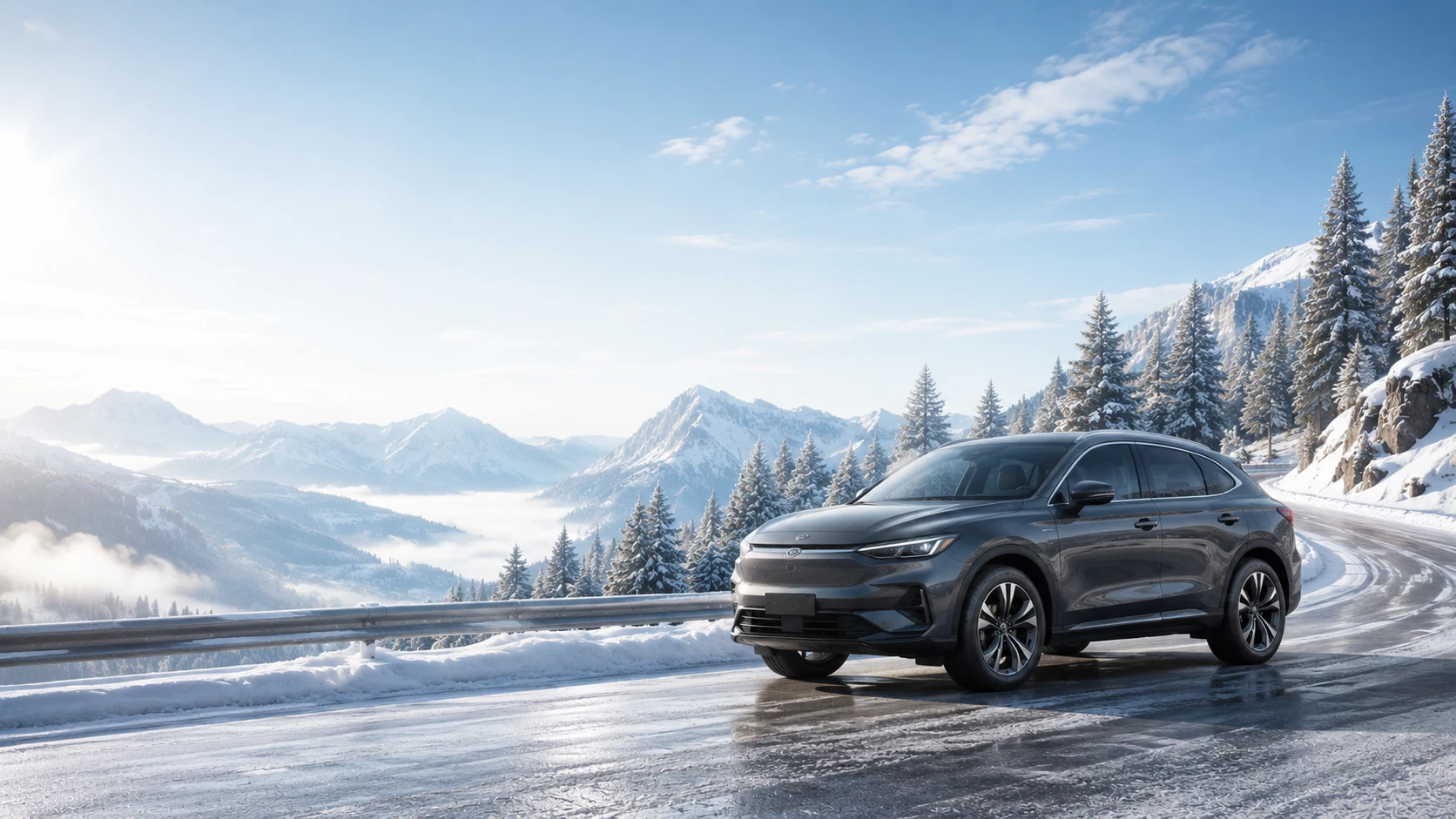
Drive into winter with a witness.
True 4K. Local storage, no subscription. Free EU shipping, 2-year warranty and 30-day returns.


Leave a Reply